
Nine New Deacons Ordained at the Cathedral Church of St. Paul

The Episcopal Diocese of Massachusetts celebrated the ordination of nine new deacons on May 30 at the Cathedral Church of St. Paul.
The Rt. Rev’d Julia E. Whitworth, Bishop of the Diocese of Massachusetts, led the service and ordained the new deacons: Karen Pocalyko Aalto, Kourtni Brown Patten, Robertha Q. Dwuye, Alden Emery Jackson Fossett, Julie Oldfield House, William Kiwanuka Kazibwe, Nelson Adams Pike, Alec F. Vaughn, and Jason Von Ehrenkrook. As transitional deacons, they are all expected to be ordained as priests later on.
“This class of nine ordinands are a great representation of how Episcopal clergy are serving the Church and the world in a variety of settings,” said the Rev’d Canon Edith W. Dolnikowski, Canon for Ordained Vocations for the diocese.
“Five will be serving full-time in congregations. Four will be serving part-time in congregations and part-time in other settings, three as healthcare chaplains and one as university professor. We are grateful to all of them for taking up the diaconal call to bring the Church to the world and the needs of the world back to the Church!”
All the nine have placements or jobs, which speaks to the diocese’s investment in clergy formation. Through the Strategic Curacies Initiative, newly ordained clergy serve as diocesan employees in congregations where strong mentoring is available, nurturing them for their first two years of ministry and building up both clergy and the communities they serve.
“The intentional formation of new priests is one of the most important long-term investments we can make as a diocese,” Whitworth has said. “The presence of a Strategic Curate in a congregation can be a vital spark, helping the community stretch, grow, and embrace new possibilities.”
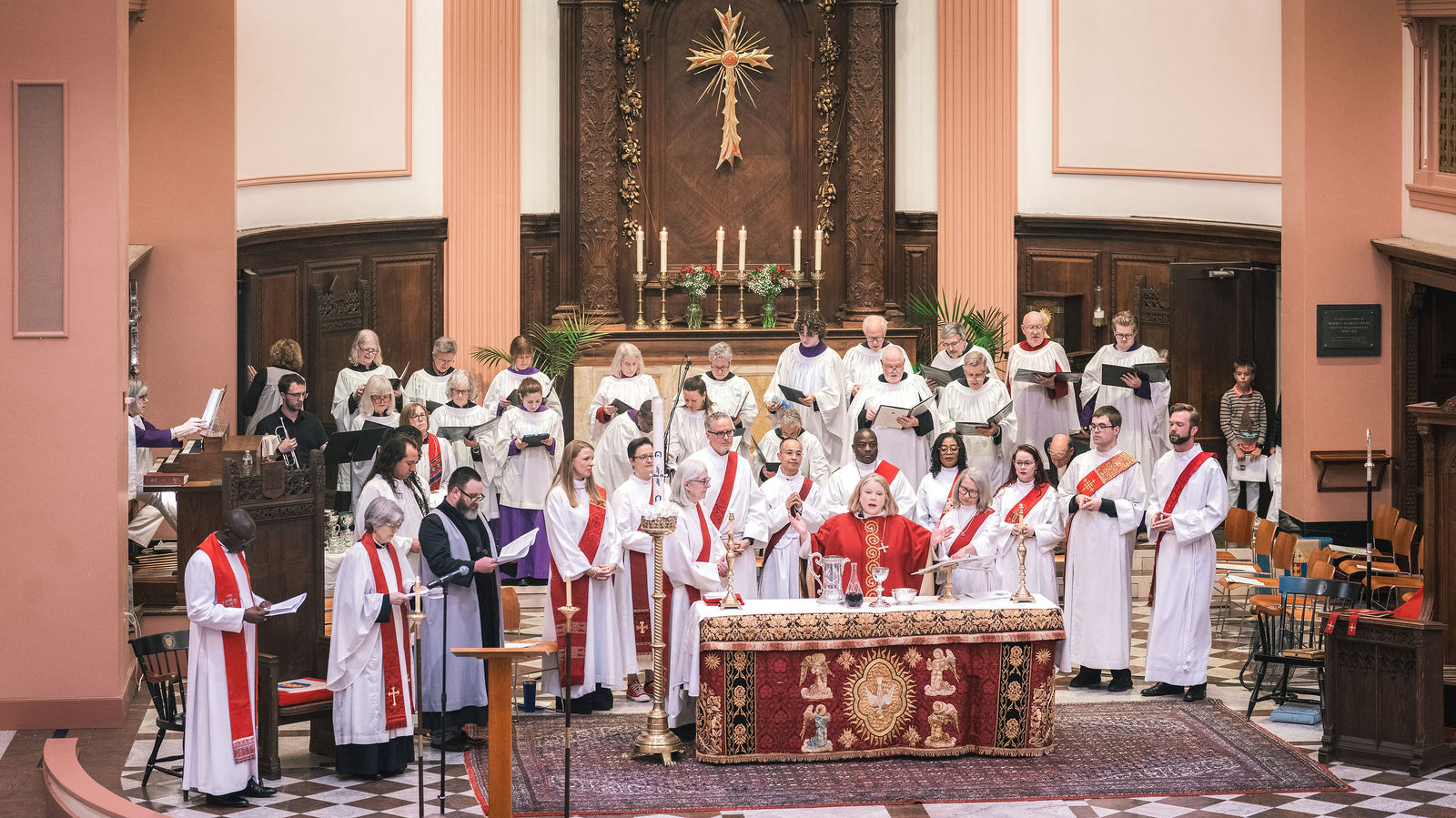
The ordination helps demonstrate the diocese's commitment to developing leaders and forming creative disciples who live their faith publicly, not just within church walls. The service showed Christ-centered communities connecting to celebrate the Spirit’s dynamic presence across the diocese.
“Uphold and stand for justice and love for all people”
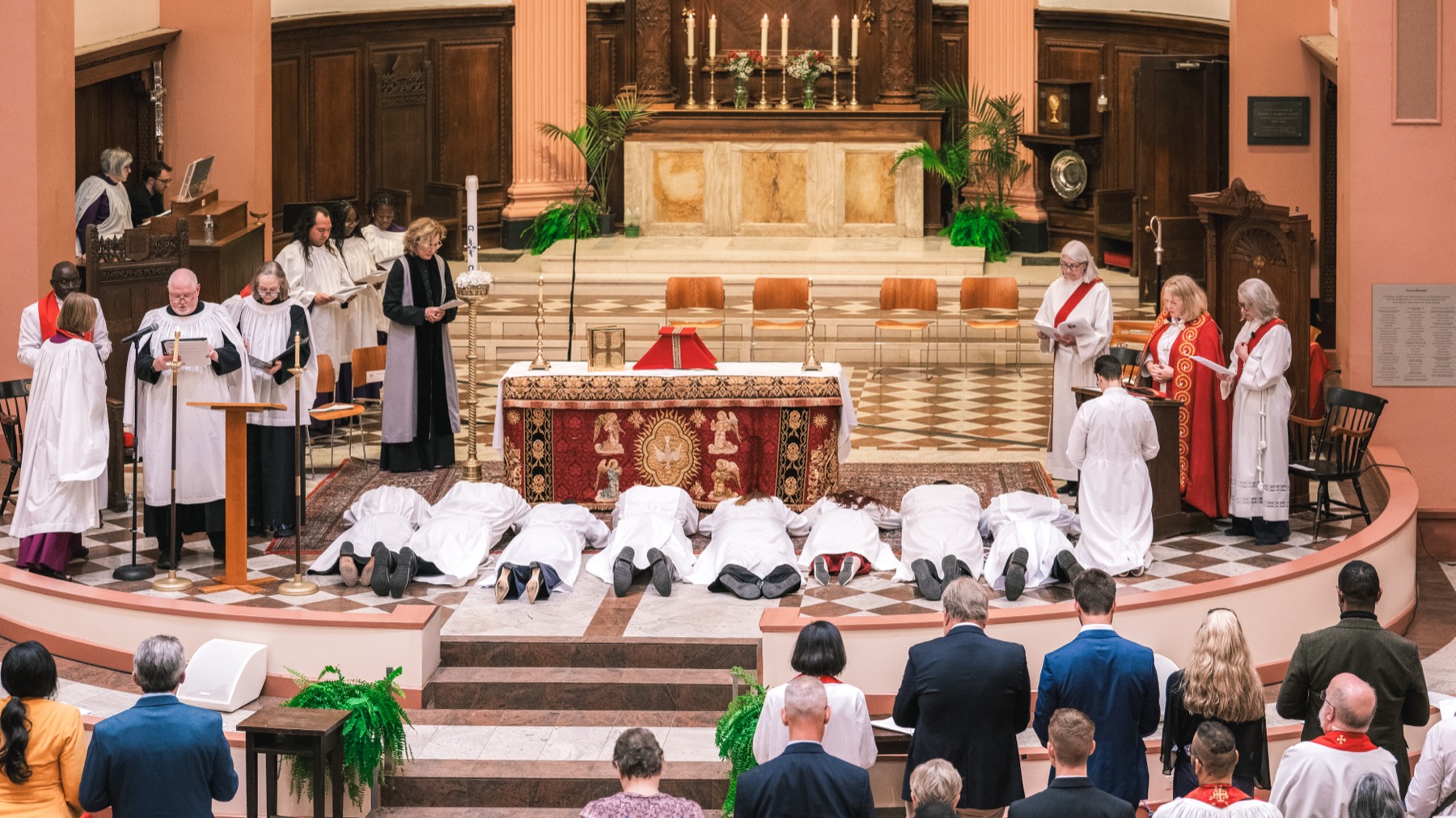
After the large procession, mentors and leaders from local parishes presented the nine candidates to the bishop. During the litany of sung prayers, the candidates mostly lay prostrate or kneeled at the altar to signify submission to Christ's will.
In the sermon, the Rev’d Joseph Mumita, rector of St. Thomas Episcopal Church in Taunton, addressed the candidates about the reality of ordained ministry.
"This is not just an aha moment," he said. "It is a sacred moment—a sacred moment of calling and consecration, a moment to be set apart."
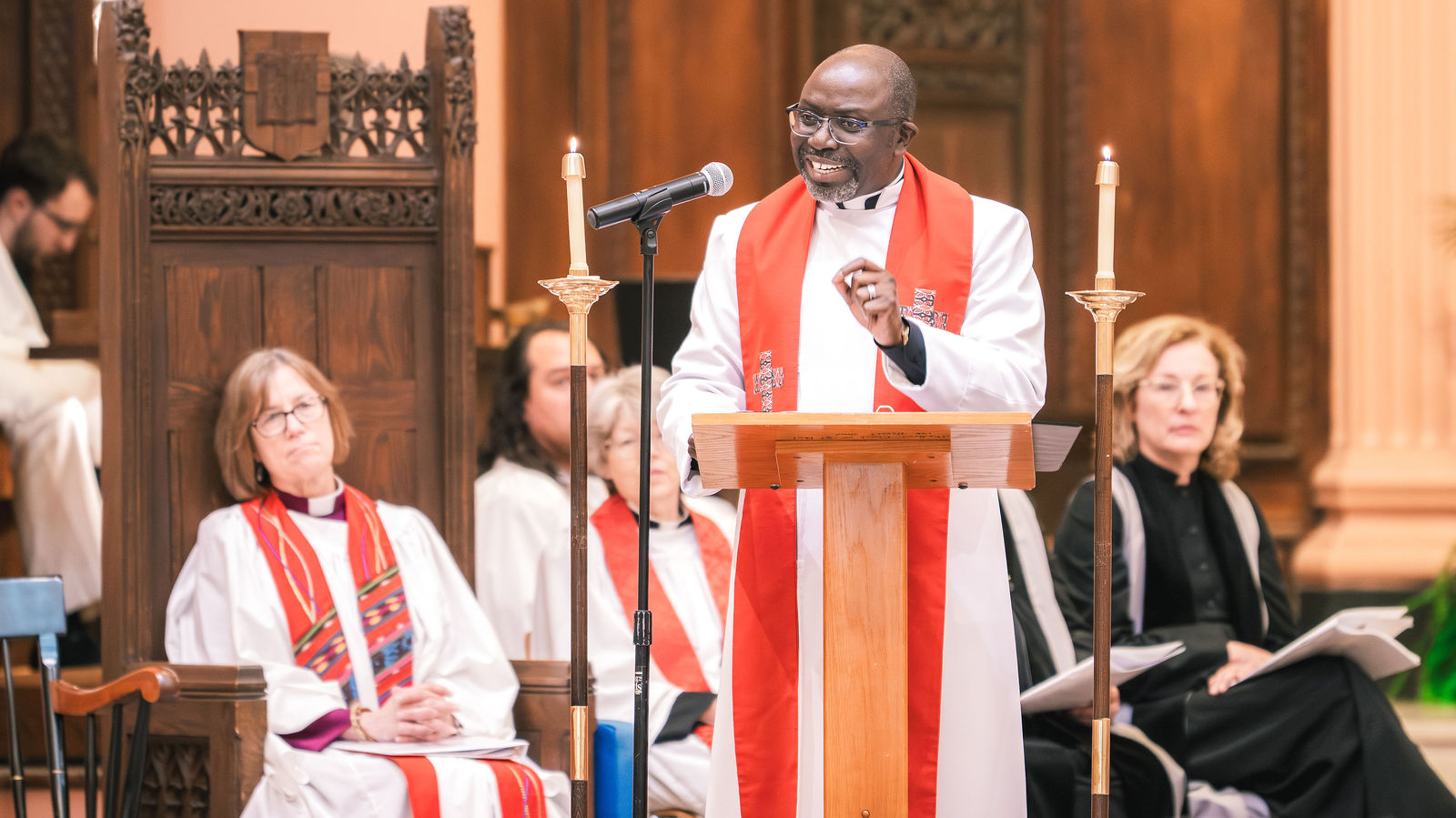
Mumita drew upon the Gospel reading from Luke—where the disciples argue about status—to talk about leadership. He said that Jesus redefined ministry as a blueprint for every ordained servant. He warned that ministry can become corrupted when calling turns into competition, and that ordination becomes dangerous if people view it as a promotion rather than a consecration.
Mumita told the ordinands that as deacons, their job is to look outward and stand with people who are marginalized.
"You will be sent to carry the soul, to feed the souls, to visit the sick... to stand with those who are marginalized in our communities, in our nation, to uphold and stand for justice and love for all people," Mumita said.
That happened next, as the nine candidates stood before Whitworth for the examination.
Filled with grace and power
"God now calls you to a special ministry of servanthood directly under your bishop," she told them. "In the name of Jesus Christ, you are to serve all people, particularly the poor, the weak, the sick, and the lonely."
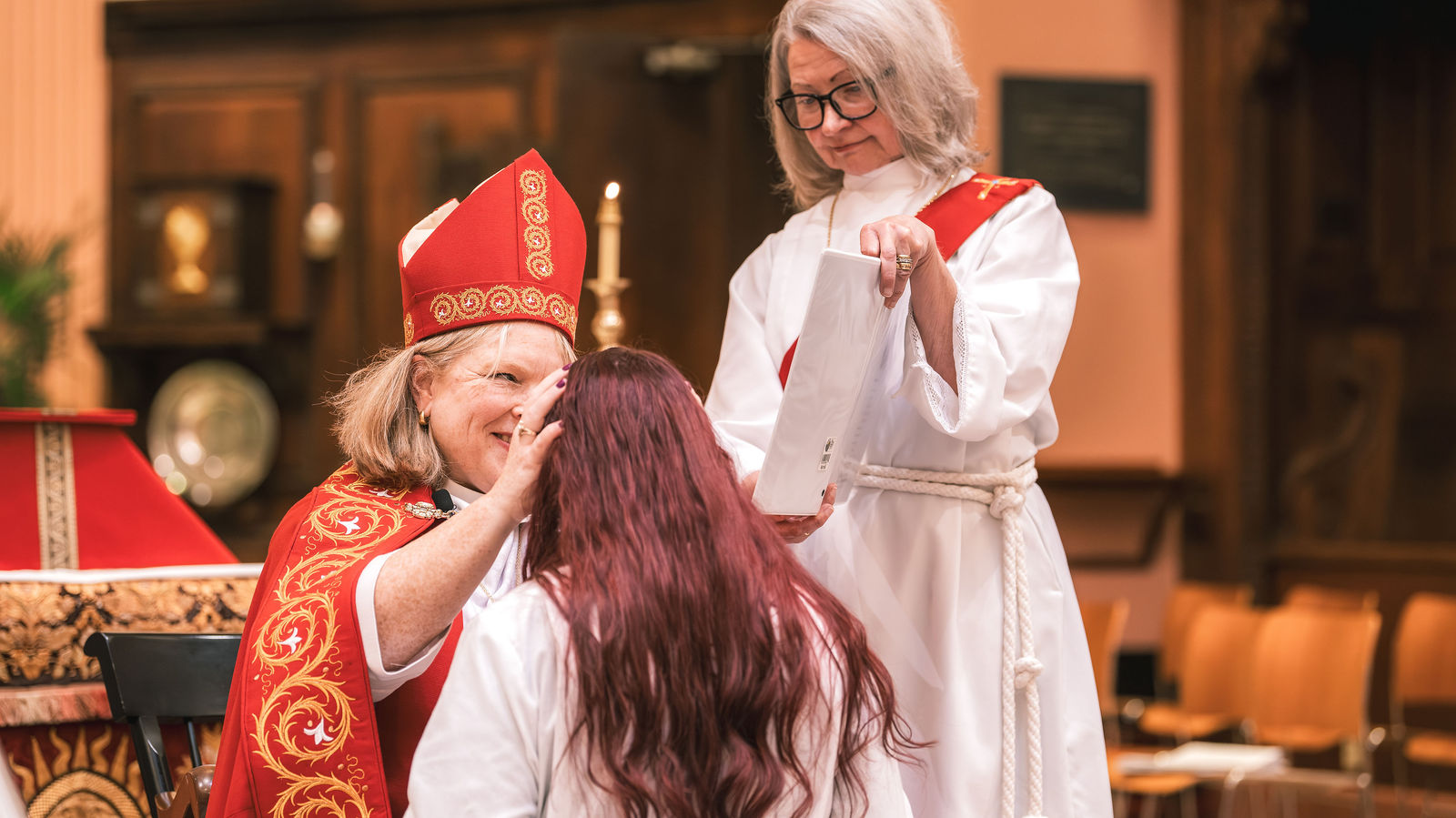
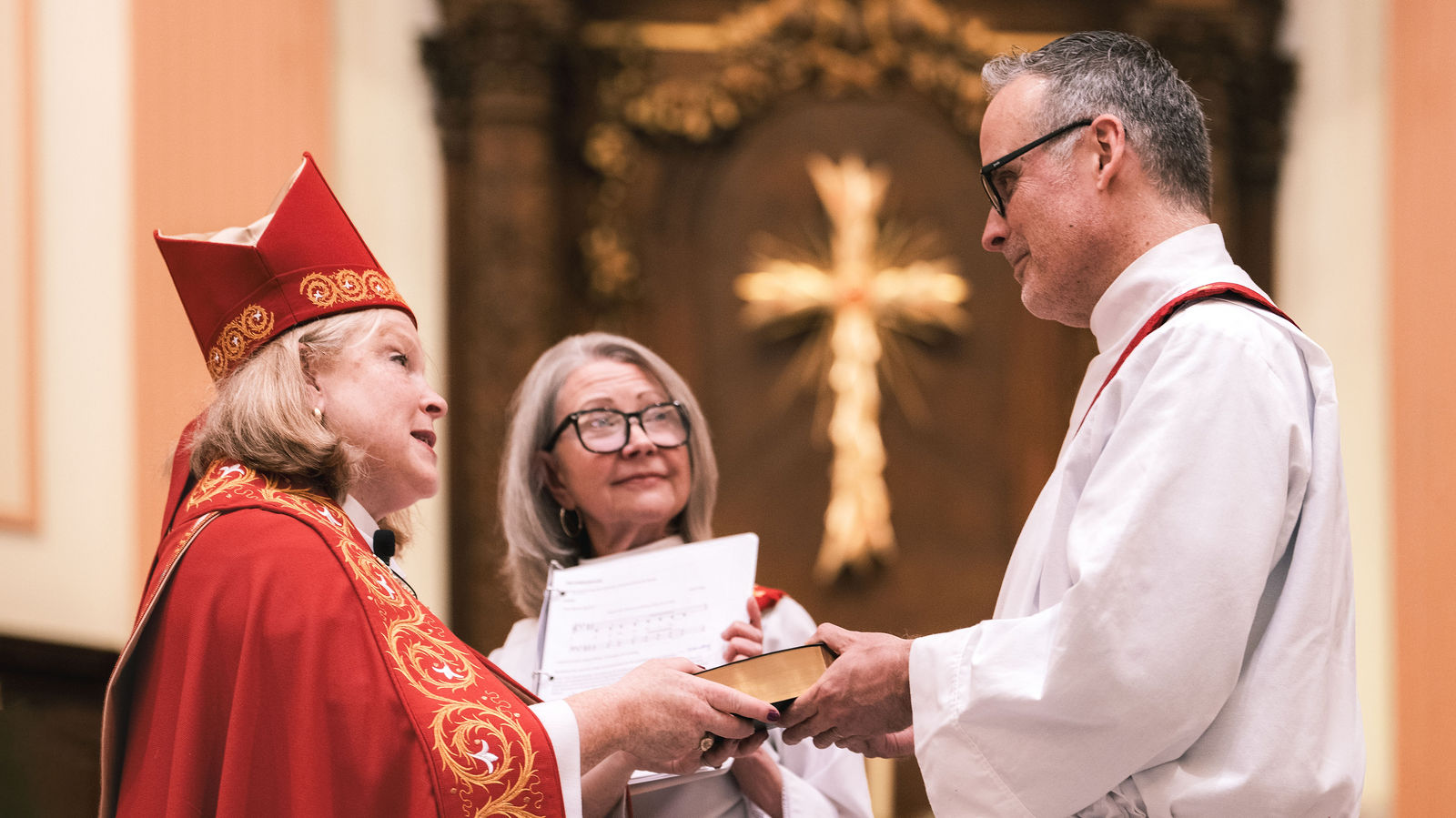
The nine knelt, and Whitworth laid her hands on each candidate's head and prayed: "Father, through Jesus Christ your Son, give your Holy Spirit to [name]; fill them with grace and power, and make them a deacon in your church."
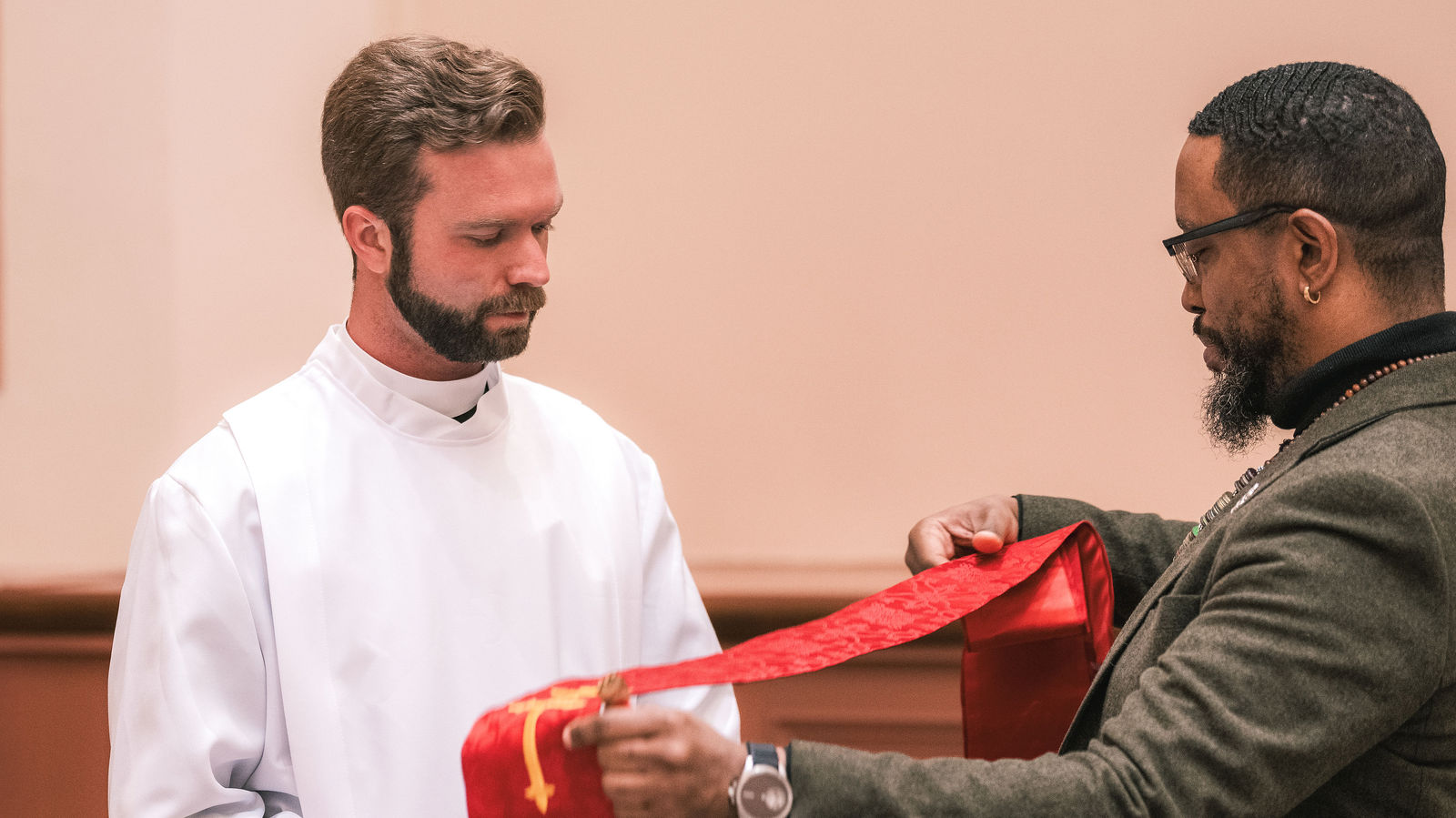
Amid applause, the nine put on their vestments and received copies of the Holy Bible as a sign of their authority.
Whitworth told the congregation that it takes an entire community to raise up a leader for ordained ministry. She asked spouses, children, partners, extended family members, mentors, and sponsoring parishes to stand up one group at a time. Nearly everyone in the building stood up, showing the deep network of support across the diocese.
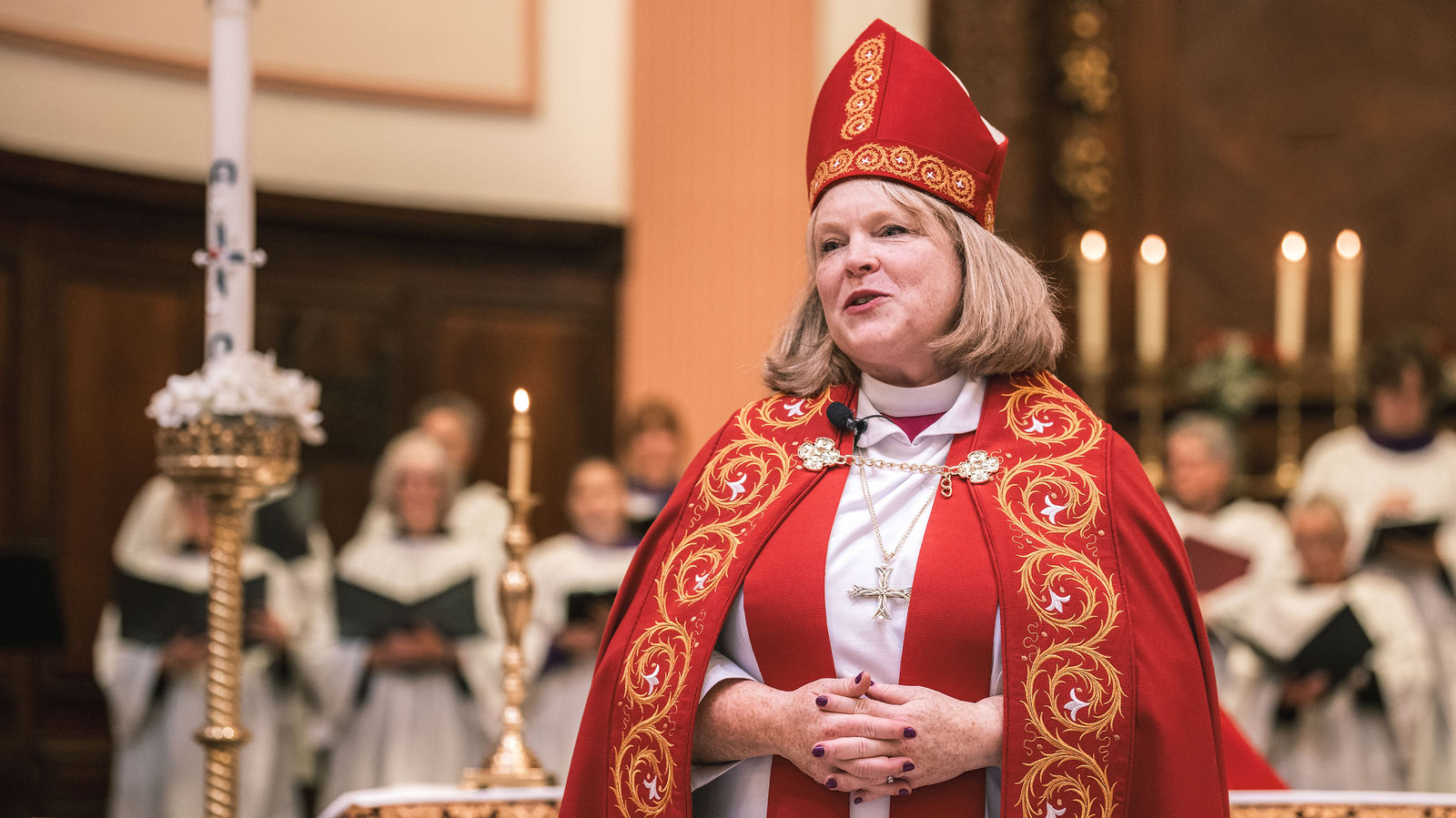
"Well done, Church," Whitworth told them, and the congregation applauded again.
After a Holy Eucharist that featured music from a combined diocesan choir, the nine new deacons left the cathedral to begin their work in the world, sent out to serve the public and share God's love.
Prior to the ordination, the nine candidates were asked to share the story of their calling, mentors, and local congregations with Diocese of Massachusetts readers. They reflected on balancing diaconate work with other careers, the personal significance of this milestone, and their hopes for the future. They also described moments of unexpected joy, how their faith has evolved, and how the church can alleviate suffering and invite others into a deeply connected, shared diocesan mission. Here are their replies.
Karen Pocalyko Aalto: "Let go of needing to know the answer"
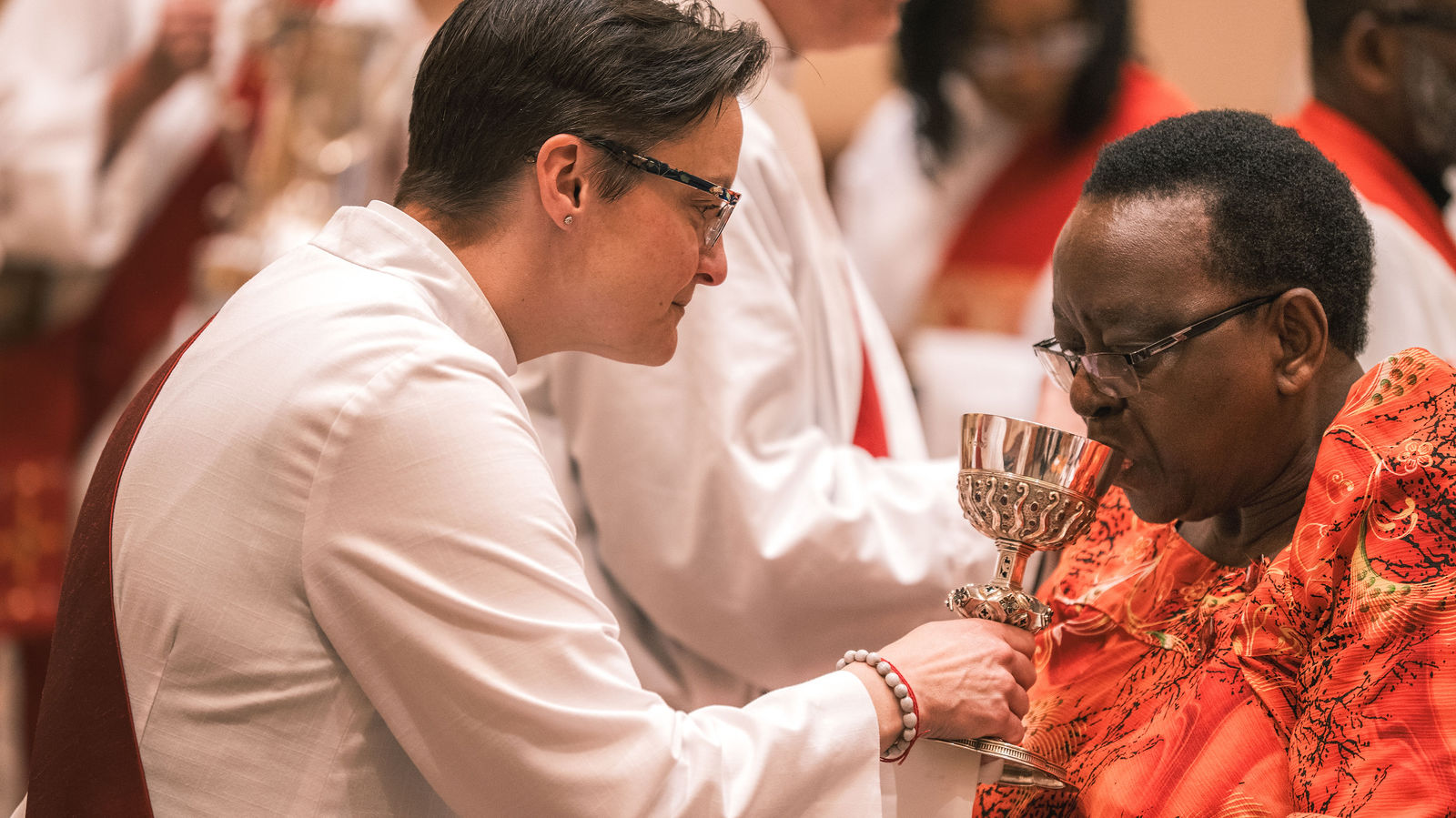
Home/Sending Parish: Christ Church, Andover
Education: Hartford International University of Religion and Peace, master of arts in chaplaincy
Recent/Current Placements: Emmanuel Episcopal Church, Wakefield, seminarian; Tufts Care at Home, hospice chaplain
My calling
I grew up attending a small reformed church in a small town in New Jersey, which was home to me until we moved to New York when I was in high school. I swore off God and religion altogether when my 17-year-old sister-cousin Amy died by suicide when I was 18. I spent the rest of my college years working towards a practical, responsible life; for 15 years I was in corporate America, obtaining an MBA and working first as a product marketing manager and then, after obtaining a master’s degree in accounting, a CPA. I always had a desire, though, for a more purposeful, intentional career. I wanted a vocation, not a job—I just didn't know what that would look like.
This dissatisfaction, coupled with stress of infertility treatments (our son is a product of many years of IVF and we were unable to have any more children after him) caused me a summer of insomnia and anxiety which culminated in a panic attack as I sat in traffic on the Tobin Bridge one morning in early 2015. I knew something needed to change. I began a meditation practice, joined a local Insight meditation center and began to look for another job.
In 2016, I found a listing on Craigslist for a staff role as the director of finance at Christ Church, Andover. Despite my misgivings about Christianity and God (I was terrified the Rev’d Michael Hodges would ask me how I felt about God and I'd have to confess that He and I were in a fight!), I applied for and took the position and found that I really enjoyed the work of caring for the church's finances. At this time, in my meditation practice I found that I was looking for more of a spiritual practice. I missed feeling connected to God and was open to the idea of trying worship again. So, when the treasurer invited me to Annual Meeting to introduce me to the parish, I decided to first attend the service.
Thanks to the people there, especially Michael Hodges's wife, Laurie, who "showed me the ropes" of the Book of Common Prayer, it felt like coming home. As a former English major and musician, I was especially drawn to the beauty of the language and music of the Holy Eucharist service, but more important, I loved the idea of God as love and that He welcomed all people, no matter who they were or where they were in their faith journey. I began attending regularly, then getting more involved, singing with the choir and helping behind the scenes as a staff member.
It was during the pandemic, though, after hearing the stories about the people becoming sick and dying alone and knowing so many parishioners who were isolated from their family and friends, that I really began to realize that I wanted to help people. And I especially wanted to help those who had no faith at all those who were like me, who felt alone and were suffering. In 2021, I began a program at Hartford International University of Religion and Peace, working towards a master of arts in chaplaincy.
It was this fall when the idea of ordination came up: during my final project in my Death and Dying class, I raised my hands into orans position to invite people into quiet reflection, and I got a flash of presiding over the Eucharist, to which my first reaction was "oh heck no!" But then, during my participation in the discernment group called Loving the Questions as offered by the Diocese of Western Massachusetts, it became a real question for me. Both Christ Church priests, the Rev’d Jen Vath, the assistant rector who became my sponsoring priest, and Hodges - encouraged me to look into it. And here I am! I never would have predicted I'd be here 11 years since that day on the Tobin Bridge, but I am so grateful.
In addition to my two mentors from Christ Church, over the past three years I've been fortunate to work with and learn from the Rev’d Spencer Hatcher at the Barbara C. Harris Camp and Conference Center, the Rev’d Jack Clark and the Rev’d Ema Rosero-Nordalm at Trinity/Trinidad Episcopal Haverhill, the Rev’d Brett Johnson at Emmanuel Wakefield, and the Rev’d Elise Feyerherm at Boston University. Every one of these people have helped form me and the ministry I will do in the coming months and years.
Balancing careers
I have spent the last year as a part time (32 hours) hospice chaplain, completing my transition out of my staff role at Christ Church in January 2026. Chaplaincy is an important part of my life—I still have a real desire to be with those who might be struggling with their faith and the suffering that arises as a result —and I hope to continue this work in some capacity as I transition to parish ministry. My ideal situation is a part-time clergy role which I can balance with per diem (2 days a week) of hospice chaplaincy work.
Significance of ordination
Quite honestly, when I was first accepted as a postulant, I wasn't sure how it would work. Changing careers at 47 meant that I needed to continue working while I went to school full- time, did my parish field education and Clinical Pastoral Education (CPE), in addition to (trying to!) be present with my family. It was SO MUCH to juggle at times. I'm so happy to be done with my theological education so I can rest a bit and read what I'd like! But also, finishing my education means I have the time to focus on parish ministry work, which is really exciting.
Sources of joy
The feeling that I am FINALLY living into my purpose. I have spent the past two decades searching for a way to live my life with real meaning, to make a difference in the world, and I feel like I've finally found a way to do it through my dual vocation of hospice chaplaincy and parish ministry. Companioning people from all walks of life and religious backgrounds as they work to process and integrate the knowledge that their life is ending is an immense privilege, allowing me to see how God touches people in so many different ways. And both vocations allow me to unequivocally love people no matter who they are. It is life-giving and affirming work which brings me so much joy.
Deepening faith
Working as an accountant puts you in a position of needing to be the expert in the room, and this process is really the first time in my adult life that I've just let go of needing to know the answer and stayed open to where God might be working in, around, and through my life. As a result, my faith has only deepened through this process; I can now see God working on so many levels, in so many places - even in the darkest of nights, when we feel like we are alone.
Becoming the diocese together
I believe strongly that the church needs to be better about going outside the traditional walls of the church and working to meet people where they are. There is a real need for spiritual care, yes, but more importantly, church needs to be a safe container for people to wrestle with the deep, hard questions. To be wildly inclusive of all people, we need to reimagine the way we invite people into church and community. This belief that church IS the place where we can work together to live into each one of our callings, to help care for our communities - will underpin all of my work as transitional deacon.
Advice about pursuing ordination
God wants you to live into your calling. Stay open, hold the idea lightly, and talk to people who are important to you. If you are like me a career changer - fulfilling the requirements of this process IS possible; don't let the anxiety of how it's all going to work deter you!
Kourtni Brown Patten: "Help the church pay attention”
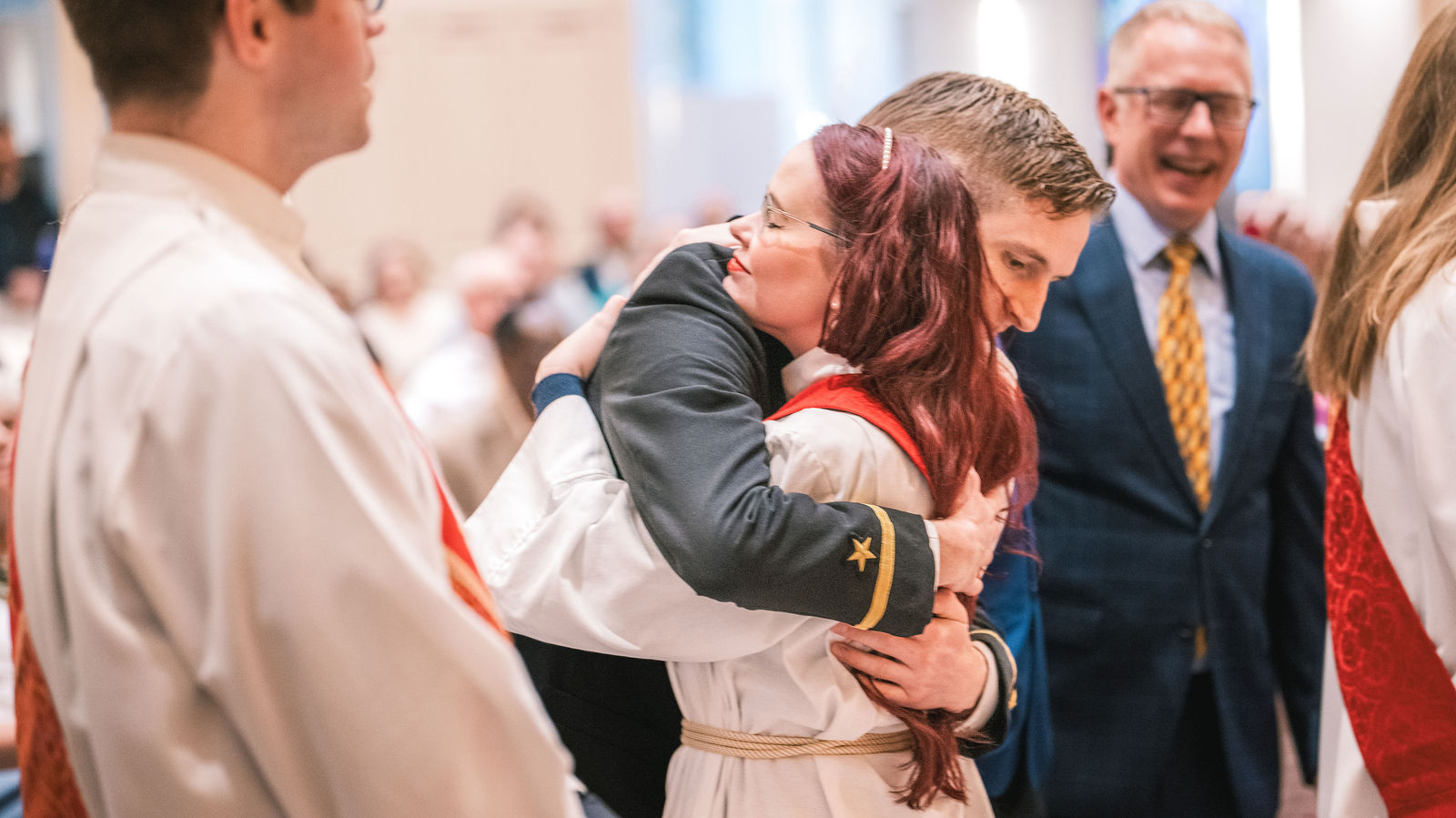
Home/Sending Parish: Grace Church, Salem
Education: Seminary (unspecified)
Recent/Current Placements: Beverly Hospital, staff chaplain; Transition Committee
My calling
I grew up in a military family, moving from Michigan to Virginia, then to Okinawa, back to Virginia, and finally to Maryland. Some of my earliest memories are of Okinawa: coral reefs, Eisa drummers, heat so intense we were told not to play outside, and the ache of leaving when it was time to move again. For me, childhood was not divided so much by elementary, middle, and high school as by Michigan, Virginia, Okinawa, Virginia again, and Maryland.
Military families talk a lot about service and dedication, but they are also about community, resilience, adaptability, and learning how to make a home in changing places. I think the seeds of my call were planted there.
My first conscious sense of call came when I was a teenager, teaching Sunday school and serving on the children's and worship committees at my church. I loved helping children build a foundation of faith and grow in their relationship with God. I loved watching people realize that church was not just something happening around them. They had a place in it.
I went to seminary, first preparing for ordained ministry as a vocational deacon in the United Methodist Church. Then life took some turns. One day, I realized that The Episcopal Church had become my home. I had been working and worshiping in Episcopal parishes for years. The writing was on the wall, so I was confirmed in the Episcopal Church. I thought I was simply finding my way home. I did not expect to hear God saying, "I'm still calling you."
The Episcopal Church became home: the Eucharist, the church year, sacred music, the Book of Common Prayer, and the steady sense that liturgy forms us over time. I was not argued into the Episcopal Church. I was welcomed in, prayed in, sung in, fed at the table, and slowly gathered in.
I have been formed by several communities in the Diocese of Massachusetts, most especially Grace Church in Salem. I loved serving on the Transition Committee, and I actually enjoy diocesan convention because I get to see the DioMass family. I am especially grateful for the Rev’d Debbie Phillips, who modeled generous welcome and a deep love of the Book of Common Prayer and sacred music. I am also grateful for Cheryl McDevitt, who taught me to lead with curiosity and kindness and to trust myself. Most of all, I am grateful to my family, especially my husband, Ryan Patten, whose love and support have carried me through this process. He is a church organist, so our house is full of lively conversations about hymn selections, liturgy, and how music proclaims theology. Very normal dinner conversation. Obviously.
Balancing careers
Yes. I serve as the staff chaplain at Beverly Hospital. It's going really well. I recently had a conversation in the Critical Care Unit about how the hospital can embody some of the best parts of what it means to be a church: community, support, love, kindness, and generosity toward each other and toward the strangers we serve.
I love working in a place where ministry happens through steady presence, listening, and the willingness to remain with people in difficult places. It's not about being perfect. It's about leading with love and staying curious. Hospital chaplaincy keeps me close to grief, fear, uncertainty, crisis, and hope.
Balancing hospital work and diaconal ministry will take care, intention, and, honestly, some luck, but the two vocations speak to each other. Honestly, it feels like one vocation in two places. My work as a chaplain keeps me close to the needs of the world. The diaconate calls me to bring those needs before the church, and to help the church respond with compassion, courage, and hope.
Significance of ordination
This ordination feels like fulfilling "the reason for being," my ikigai as they say in Japan, that God gave me. I have carried this sense of call for many years, through seminary, denominational transition, parish ministry, children's formation, and chaplaincy. There were times when the path was not simple or direct, but the call persisted. Stubbornly persisted.
When I read the ordination rite in the Book of Common Prayer, its language about responsibility, service, proclamation, and the needs of the world gave words to something I had been feeling for a long time.
Even though this is a step toward the priesthood, I do not want to treat the diaconate like a waiting room. I want it to mark me. I want it to shape the kind of priest I hope to become: one who remembers that the altar is never far from the hospital room or the child asking a question.
The Eucharist has become one of the places where I trust healing most. Not because everything is suddenly okay, but because Christ meets us truthfully: hungry, wounded, beloved, and still worth feeding. As I move toward the priesthood, I keep coming back to that.
Hopes for the future
I am especially drawn to the places where pastoral care, formation, and justice meet visiting the sick, supporting caregivers, accompanying people through medical crises, helping congregations talk about illness and end-of-life decisions, and equipping people to care for one another with confidence and tenderness.
I hope to be the kind of deacon who helps the church pay attention. Not in a scolding way, but in a faithful way: pay attention to who is missing, who is hurting, who is tired, who is afraid, who is hungry, who is lonely, and who has been standing at the edge of the room wondering if there is a place for them.
Ultimately, I hope my ministry reminds people that they are of sacred worth and that they have a place in the church and at the table.
As I move toward the priesthood, I keep coming back to the Eucharist. Not because it magically fixes everything, but because it tells the truth: we are hungry, we are breakable, and Christ still feeds us. That feels like healing to me.
Welcoming others
Home is a loaded word for a recovering military dependent. So, when the Episcopal Church became home, it did not happen all at once. It happened gradually.
One moment that stays with me happened at Grace Church in Salem. My husband was the organist there, and on my first day I was sitting out of the way while the choir rehearsed. Debbie Phillips looked over and said, "Come sing with us." I told her I was a terrible singer. In fact, I was scared of singing and being judged for sounding off. "That's ok," she said, "That's what rehearsals are for." She gestured for me to sit next to her. It was so, so, so simple and so, so, so effective.
That moment was my welcome to the Episcopal church. Real welcome is not just being friendly. It is making room for someone to participate before they are perfect, before they know all the words, before they are sure they belong. That is the kind of welcome I hope to offer others: come sing with us, come pray with us, come learn with us, come be part of this, come and bring yourself.
Sources of joy
One of the greatest joys of my path has been watching people discover that they have something to offer the church.
I have seen that joy especially in children and youth: when they serve at the altar, ask serious theological questions, sing, pray, or realize that worship is not something adults simply perform for them. They are part of the church now. Their questions matter. Their presence matters. Their gifts matter.
Some of my deepest joys have come from watching children and youth realize they are not church-in-training. They are the church. All the kids belonged. That is a hill I will gladly die on.
That has given me deep joy and hope. The church is not just something we inherit. It is something we become together.
Deepening faith
My understanding of Jesus has become more grounded, embodied, and present in ordinary human life.
I think earlier in my journey, I imagined faith as something that would become more polished or certain over time. Ministry has taught me something different. I have encountered Christ in hospital rooms, children's questions, grief, silence, sacraments, difficult conversations, and small acts of care.
I have been shaped by traditions that taught me to notice the sacredness in creation and ordinary life. That has made me more attentive to Christ not only in obviously "churchy" places, but in hospital rooms, in children's questions, in grief, in silence, in sacraments, and in the small acts of care that may look ordinary until you realize how much they matter.
I have become more convinced that Jesus meets people where they actually are, not where we imagine they should be. That has made my faith more compassionate, more practical, and more hopeful.
It has also changed how I understand healing. Healing does not always mean everything is fixed. Sometimes healing begins when Christ meets us truthfully: hungry, wounded, beloved, and still worth feeding.
Alleviating suffering
In hospital chaplaincy, I often experience the church's ministry in small but holy moments. One patient I remember was nearing the end of life and grieving that she would probably never get to hold her granddaughter. She wondered whether crocheting a blanket for the baby would matter.
I shared with her that my own grandmother had crocheted a blanket for me, and that I still have it. That small conversation helped her see that her love could still reach her granddaughter. It did not erase her suffering, but it helped her bless the future.
To me, that is part of how the church stands with people who are hurting. We cannot always remove suffering. But we can witness it, honor it, and help people find love, dignity, and hope within it.
Becoming the diocese together
I believe people become true partners in ministry when they are invited, trusted, and formed.
One of my hopes is to help congregations grow in confidence around pastoral care and service: how to visit someone who is sick, how to accompany a grieving family, how to support caregivers, how to talk faithfully about illness or end-of-life decisions, and how to notice suffering in their own communities.
When people are equipped and trusted, they begin to see themselves not simply as volunteers filling slots, but as ministers of the Gospel. That is part of becoming the diocese together: recognizing that the work of the church belongs to all of us.
I want to help build church communities where no one feels othered by the solution. I want people to know they are not just helping the church do ministry. They are the church doing ministry.
Advice about pursuing ordination
Stay curious and kind: to the world, to the church, and to yourself.
Sometimes a call begins as curiosity, joy, restlessness, or a sense that something in you keeps leaning toward the needs of the world and the life of the church. You do not have to understand it perfectly right away.
So, ask questions. Pray. Serve. Talk to wise people. Notice what gives you life. Notice what breaks your heart. Be honest about what scares you, but do not let fear be the only voice in the room. And do not bully yourself into clarity before clarity is ready to arrive.
Howard Thurman is often quoted as saying, "Don't ask what the world needs. Ask what makes you come alive, and go do that, because what the world needs is people who have come alive." That feels true to me. Pay attention to what makes you come alive, especially when it also pulls you toward love, service, and the needs of the world.
Robertha Q. Dwuye: “I am ready, when God is ready”
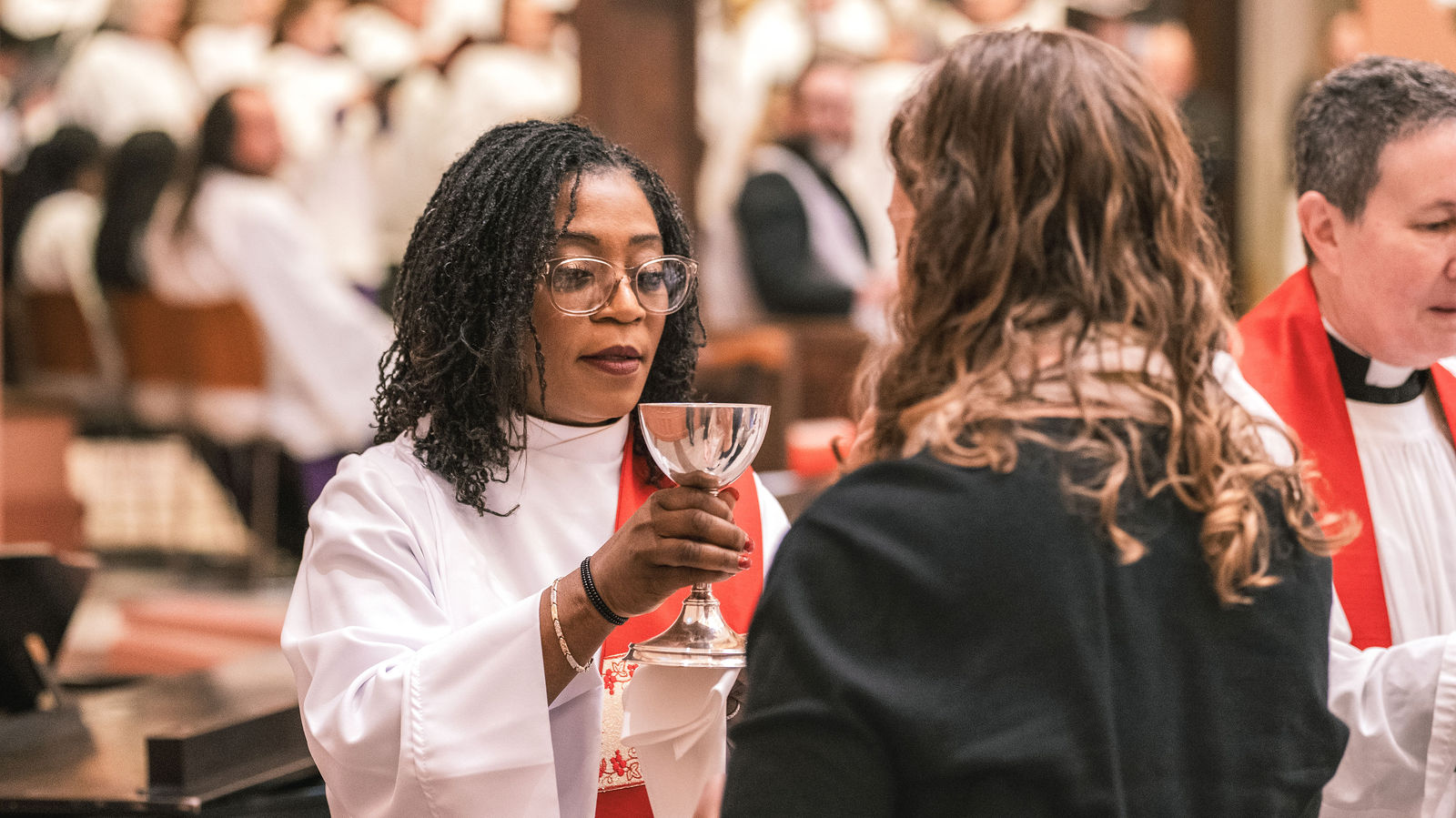
Home/Sending Parish: Episcopal Church of St. Thomas, Taunton
Education: Voorhees College, General Theological Seminary
Other Placements/Communities: Bristol Trinity Family, St. Luke Family
My calling
When I was a little girl, my mother played a significant role in my niche for being involved in the church activities through Sunday school, choir, Episcopal Youth Council, Liberian Council of Churches (worked closely with the Muslim community), Liberian National Student Christian Council (an ecumenical organization), etc. I later found myself working in the office of the bishop of the Episcopal Church of Liberia, the late Rt. Rev’d Bishop Edward W. Neufville.
I have always felt what I now know to be a calling, from “the strong sense of connection and willingness to sacrifice time volunteering, caring, empathizing, praying, and helping nurture others in my life.” I was once told by Bishop Neufville that “God had a calling upon my life,” encouraging me to answer “the call.” When I immigrated to the United States, while enrolled at Voorhees College in Denmark, SC, the parish priest with whom I worked closely also saw a calling in me. For each time these revelations came, I would gladly state, “I am ready, when God is ready.”
Fast forward to 2015: I approached my parish priest, Rev’d Rich, about possibly exploring my intentions for going into the ministry. He was eager to help see me through the process of answering my call. However, my mother Zettie Dwuye has become critically ill, and I needed to juggle my time between Massachusetts and Liberia until her passing (may her soul rest in peace).
In 2021, I once again approached my parish priest, now Rev’d Joseph Mumita, and started my process. That has led me to now. The Saint Thomas parish, Edie, Pat, Retired Bishop Alan, GTS family, Bristol Trinity family, St. Luke family, Rev’d Natasha Stewart, friends and classmates (Sapient), daughter Mygia-Jordan M. Findley, nieces (Condoleezza, Calvinne, Allison), sister Josephine, my aunties, cousins, and of course Igor Michael (my partner of nine years who has been steadfast in his unwavering support and love). My mentors, supporters, and congregations—I couldn’t have done this without their love, prayers, mentorship, support, and grace.
Balancing careers
I am not balancing diaconate work with another career. I am going to do this full time.
Significance of ordination
The significance of this ordination to me is more of taking the right step in the right direction, in fulfilling my call to serve God and his people.
Hopes for the future
As a deacon, I hope to continue to serve God in the various ways that I have been called to, uncover other fulfillments, learn and understand to some extent “God’s people,” be a spiritual leader, lead with empathy, love, kindness, peace, forgiveness, prayerfully, and with obedience.
Welcoming others
The experience for me was absolutely warm, welcoming, inclusive, and it felt home-like right from the start, and that is the kind of ministry I hope to project (open, welcoming, making others feel seen, heard, loved, inclusive, and at home).
Sources of joy
One thing that has given me real joy is how I see the Gospel being lived out in The Episcopal Church: feeding the hungry, opening doors to the homeless, clothing the naked, according to Matthew 25:40-45 (“Whatever you do to the least of my brothers/sisters, you do for me”). These types of messages are not only preached, but rather are spirit-filled and give hope. Growing up, I’ve watched my mom care for people despite their backgrounds, journeys, etc. So, that gives me immense joy!
Deepening faith
I wouldn’t say in a surprising way, but my faith has deepened. I have learned to walk closer with Jesus, because he’s made himself known in so many more ways than one on this journey. My formation is about sitting in the silence, allowing the silence to speak peace to inner self, and listen!
Alleviating suffering
I have witnessed and continue to witness the Episcopal Church bring about God’s justice to the LGBTQI+ in the United States and the world, leading by example. One typical example is the LGBTQI+ June 6th parade held in Boston.
Becoming the diocese together
I plan to invite people into the work of the church by sharing a mutual sense of our mission and connection, so they become true partners in the community, not just attendees. Prioritize relationships so they can be turned into service and leadership. A place where people can initially attempt serving – a means to quickly help them belong. Establish ways that would help newcomers to integrate easily, maybe by introducing them to others in the church who serve in leadership roles, making it easy for them to feel part of and want to get on board. Worship, proclamation, advocacy, inclusion: it’s a simplified way “to restore all people to unity with God and each other in Christ.”
Advice about pursuing ordination
Yes! Answer your calling! In answering your calling, surrendering yourself to God, and he, will continue to do better and greater things for the Church and the world through you! Amen.
Alden Emery Jackson Fossett: "Lord, is it I?"
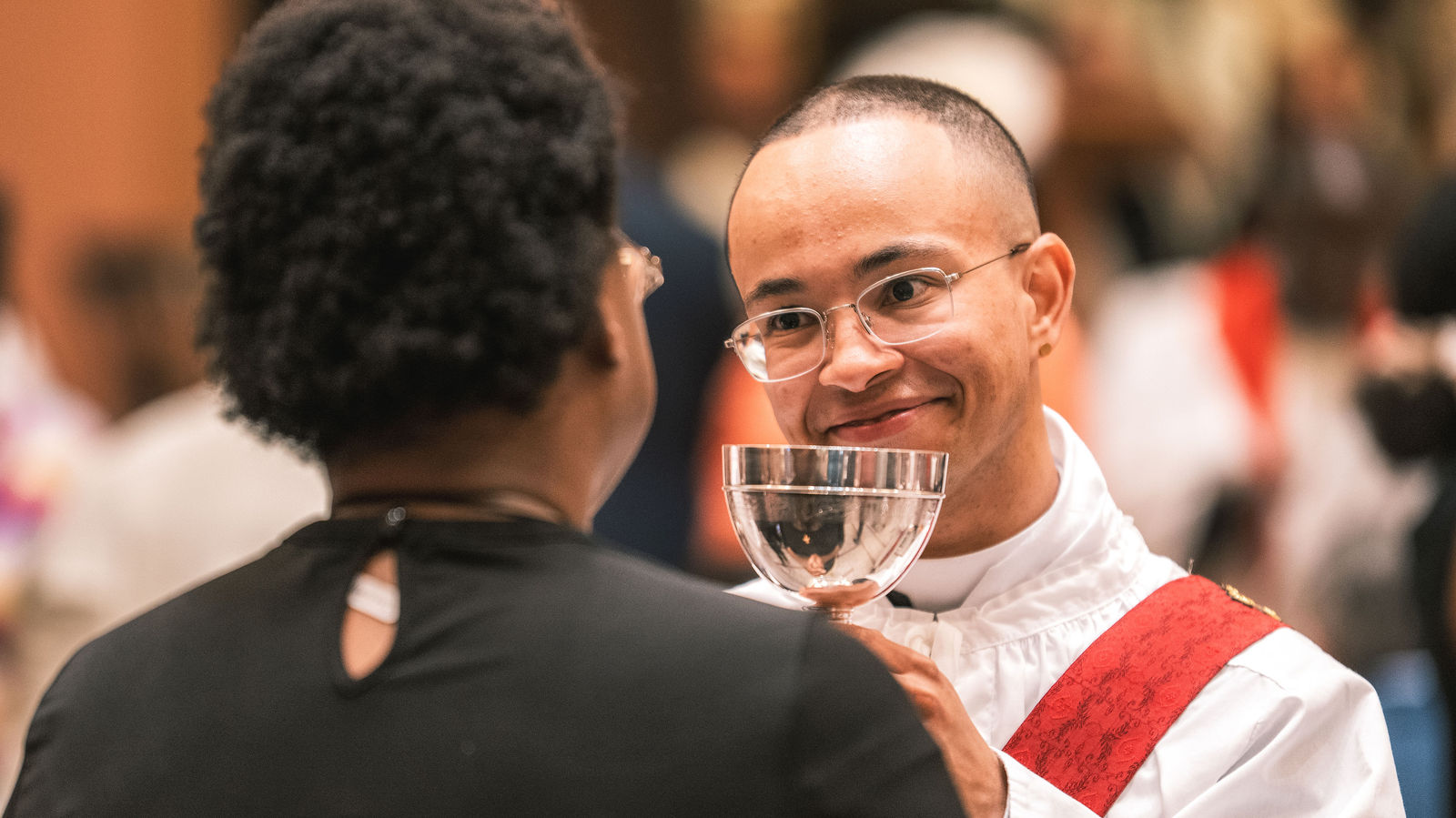
Home/Sending Parish: Christ Church, Cambridge
Education: Harvard University; Yale Divinity School/Berkeley Divinity School
Upcoming Curacy: St. Paul’s, Brookline
My calling
When the disciples learned that one of them would betray Jesus at the Passover meal, they asked him, “Lord, is it I?” (Matthew 26:22 KJV) This question has been a spiritual anchor during my life of faith and during this season of discernment and formation.
On Communion Sunday at Second Baptist Church in Los Angeles where I grew up, we were each invited to ask the Lord the same question as Judas did that night: “Master, is it I?” In asking, we would hear Jesus’ reply: “thou hast said” (Matthew 26:25). As I would ask the Lord the same question, I knew that I had the capacity to betray Him. I also experienced a pure and overwhelming sense of invitation. Jesus wanted me to sit and eat with Him.
This faith I had in Christ as a child was revived in Episcopal communities in and around Cambridge as an undergraduate student at Harvard. I could never have imagined how significantly my life would change because of my ongoing encounter with Jesus Christ in the Eucharist. Regularly receiving the consecrated bread and wine watered the seeds of my earliest wonder at and love of my savior. A familiar longing to accept Jesus’ invitation and sit at the Lord’s table intensified.
At the Society of St. John the Evangelist, the Episcopal Chaplaincy at Harvard, and Christ Church Cambridge, my faith was nourished by greater intimacy with God in the sacraments, in prayer, and in community. “Lord, is it I?” became a question I asked about the call I heard to be even closer to Jesus—standing at the altar of God. After college, I worked at Harvard’s Episcopal Chaplaincy for two years. My time there was enlivened by Darby Vassall, an anti-slavery activist and community organizer born in 1769 to enslaved parents, Tony and Cuba. Darby elected to be buried in the crypt at Christ Church Cambridge with his enslavers, the Vassall family, whose benefactions to Christ Church were funded by the profits from the Vassall’s sugar plantations in Jamaica. Being proximate to Darby and learning more about his life of service to others inclined my heart towards communion and reconciliation as I wrestled with the complexities of our inheritance.
In the Eucharist, I saw the possibility of wholeness where it appeared impossible. After formal discernment, I was sent to Yale Divinity School/Berkeley Divinity School, where I was blessed to be formed for Christian ministry immersed in a community united by commitments to learning, daily prayer, and service for the sake of the Gospel.
Significance of ordination
Ordination is a humbling reminder of God’s faithfulness in its innumerable forms, and that Jesus Christ is truly King of kings and Lord of lords. Access to theological education, formation, and the community at Yale Divinity School/Berkeley Divinity School changed my life. To have been called to learn and grow in faith alongside so many who radiate the light of God is a sure sign of the steadfast and enduring love of God. My ministry is the result of their love, support, and prayer. God was faithful not only in the going out, but also in the coming in. I will begin a curacy at St. Paul’s Brookline in June. It is a blessing to be able to return to familiar places and to beloved coworkers in the Gospel.
Hopes for the future
I pray for God’s will to be done through me and my ministry, and for God’s power to be made perfect in my weakness! As a deacon, I hope to faithfully serve all people, but especially the poor, the weak, the sick, and the lonely in the name of Jesus Christ.
Welcoming others
I feel truly at home in the Body of Christ when I am singing. I listen to the many voices filling the space: each different from mine and yet all united by the act of singing together. Filled with peace, I can rest in God’s embrace. Those coming into this community ought to be welcomed with a song of peace. The most memorable experiences of welcome I have had in church have always been when the congregation is singing together. God’s peace is God’s welcome to us, and we can extend that peace and welcome to others by inviting them to sing with us.
Sources of joy
The greatest joy so far has been exploring the riches of spiritual friendship. Our Lord himself shows to us that the work of ministry is to be taken up alongside companions who can share the graces and burdens of proclaiming the Gospel. My own friendship with him teaches me how to be a friend to others. I have had the great blessing to meet so many during this journey whose faith in Jesus has inspired my constant thanks to God in prayer. Sharing life with these siblings in Christ strengthens me.
Deepening faith
The resurrection of Jesus Christ is not simply a theological concept. It is the very essence of all reality. I understood this before undertaking this process of formation and theological education, yet my understanding was incomplete. My faith in Jesus has been enriched and transformed by experiences during field education, hospital chaplaincy, daily chapel and Sunday worship, and spiritual direction. Much was made evident to me through the Spirit’s guidance, especially about my own weaknesses, and there was always grace—more than I could comprehend. Now I know the Lord better than I did before and pray that I will continue to grow in knowledge and love of Him.
Alleviating suffering
During a recent pilgrimage with the Borderlands Ministry of the Diocese of the Rio Grande, I saw the ways that the church is seeking to alleviate the suffering of the most vulnerable along the U.S./Mexico border. In particular, I was humbled by the powerful act of bearing witness to the God-given dignity of the people who are imprisoned in detention centers by taking time to gather in prayer outside and asking God to be with all those living and working in those places.
Learning about the experiences of immigrants and asylum seekers and listening to their stories in solidarity is a way the church can bring about God’s justice. There are too many of God’s children who, like the holy family, are seeking belonging, safety, and freedom and yet are met with hostility and fear. The Borderlands Ministry reminded me of the church’s vocation to seek to love and serve Christ in those who are detained, dehumanized, and abused.
Becoming the diocese together
God works in us things that we could never have imagined. Discerning how to invite others to partner in the work of the Gospel is possible only through relationship with God. Gathering to study God’s Word, to pray, and to share our lives is the first and most important thing we can do. We can also seek to build connection through our commitment to the Gospel and our love of Jesus Christ that is nourished by our fellowship inside and outside of the church building. Over time and by grace, we are enabled and empowered by the Holy Spirit for the work of ministry in a particular context.
Advice about pursuing ordination
Everything will flow from your relationship with Jesus Christ. Who do you say that he is? Where is he in your prayer life? Ask your community, including the clergy, about your desire to discern how God is calling you to serve him in Christ’s Church. Pray for wisdom and trust that you are a fellow citizen with God’s people, and that Christ is building you and your community into a place where God lives through the Spirit.
Julie Oldfield House: "Church is a collaboration and an action word"
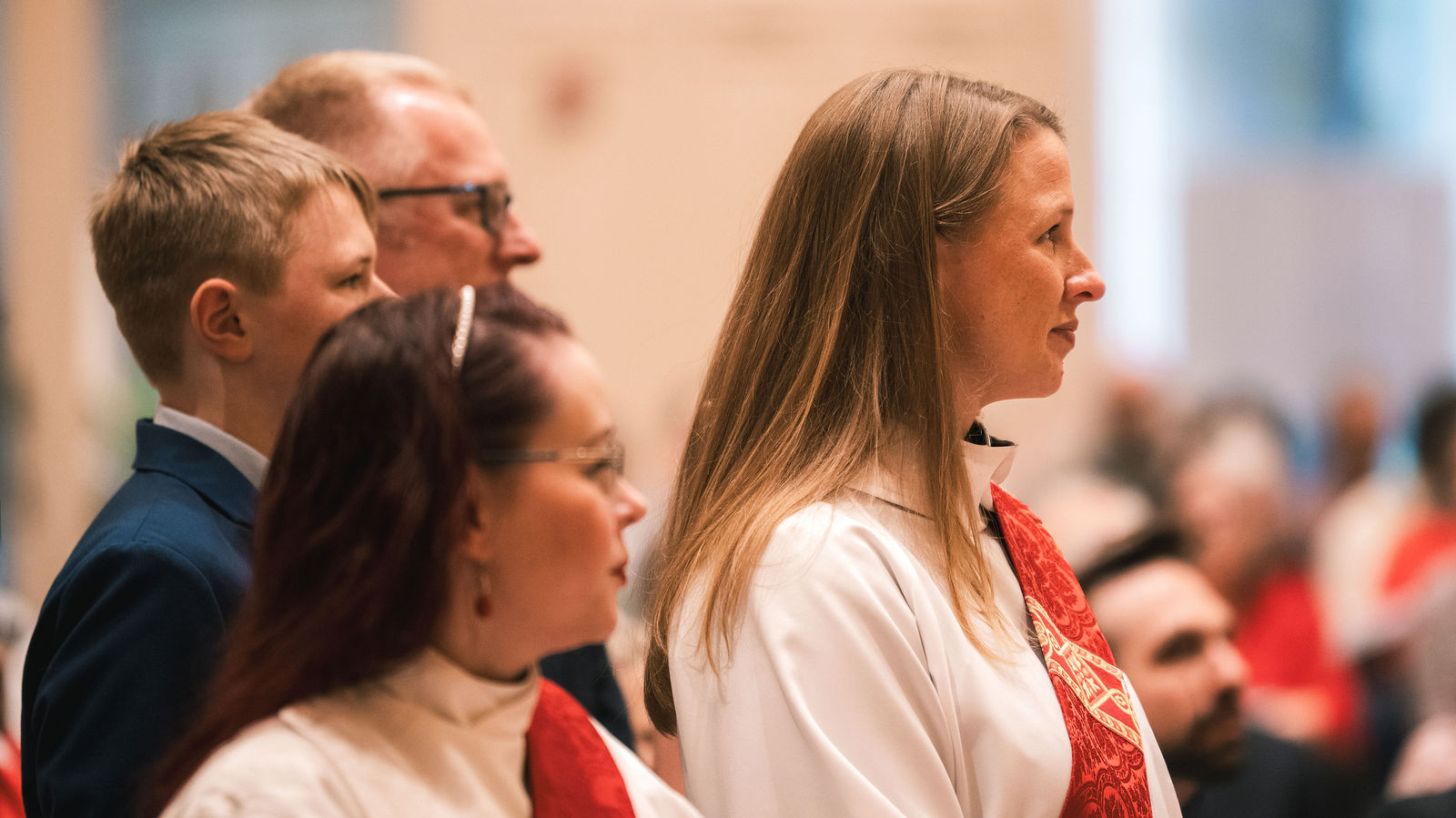
Home/Sending Parish: St. Paul’s, Brookline
Education: Church Divinity School of the Pacific
Recent/Current Placements: Hospice chaplaincy work; Brigham & Women’s Hospital (CPE)
Upcoming Curacy: Partnering in ministry with the Rev’d Rachel Wildman
My calling
I began to discern a call to ordination in 2016 but had to summon up the courage to approach my rector about it. I couldn’t even say the word “priest” out loud. Under the loving encouragement of the (now) Rt. Rev’d Jeff Mello, bishop of the Episcopal Church in Connecticut, and the people of St. Paul’s, Brookline, I began to explore what my call might look like.
Right away, I knew my heart was called to healthcare chaplaincy and that I wanted to bring the love of the church to the bedside. I also knew that my strength for that work would come from a deep rootedness in the sacraments. I formally entered the discernment process in 2019 and started seminary in 2021 after taking a Covid gap year to support my kids through remote learning.
In 2019, I also started work as a hospice chaplain and fell deeply in love with providing end-of-life care. As I moved through the formation process, I completed my CPE at Brigham & Women’s Hospital with an incredible group of women and deepened my relationships with my classmates at Church Divinity School of the Pacific. I also got to learn about parish ministry from the incomparable Rev’d Rachel Wildman, whom I will be joining in ministry for my curacy. My path to ordination has been unusually long and winding, but God has been so faithful and steadfast. Thanks be to God.
Balancing careers
I have the privilege of working as a hospice chaplain alongside my parish work. I see my chaplaincy work as another expression of my call to ordained ministry. In both roles, I accompany people in recognizing truth, beauty, and goodness in their lives. It feels like I get to live out my call more fully by having both roles alongside one another.
Significance of ordination
My ordination to the transitional diaconate feels like the completion of one part of my journey and the beginning of another. I will also be graduating from seminary, so the cumulative effect of graduation and ordination feels like a chance to look back at how much I have grown and to look ahead to see how God has equipped me for the work that awaits. It’s a celebration of what God has done and continues to do.
Sources of joy
I have found true joy in preaching and teaching the Word of God. While I am still a novice preacher, each time I sit down to prepare a sermon, I feel incredibly privileged to be given this work to do. I love looking at how ancient scripture touches our lives today and how much it still matters what happened 2000 years ago. To be tasked with delving deep into Scripture and then sharing what I learned with a community I love is such a gift. Remember, Church, your preacher loves you!
Alleviating suffering
On Christmas Eve 2025, I drove to Burlington, MA, with my mother and my children to join in worship outside the ICE detention center. Seeing all of the clergy and faithful gathered, and hearing the prayers of our own Bishop Julia Whitworth, along with others from the Mass Council of Churches, was profound. The crowd testified to God’s love for the marginalized and oppressed, trusting the Holy Spirit to carry our prayers inside.
Becoming the diocese together
Church is a collaboration and an action word. We make meaning alongside one another as we learn and grow deeper in our understanding of God. Even a sermon is just one part of an ongoing theological conversation.
One of my favorite sayings comes from the Irish language and translates as “In the shelter of each other, people live.” We exist to love and care for one another in community, and the church wants to be part of that. We want to celebrate with you, grieve with you, ask questions with you, and search for God together. None of us are perfect, but we are exactly who Jesus called to spread His message.
William Kiwanuka Kazibwe: "Stronger when everyone’s story is welcomed”
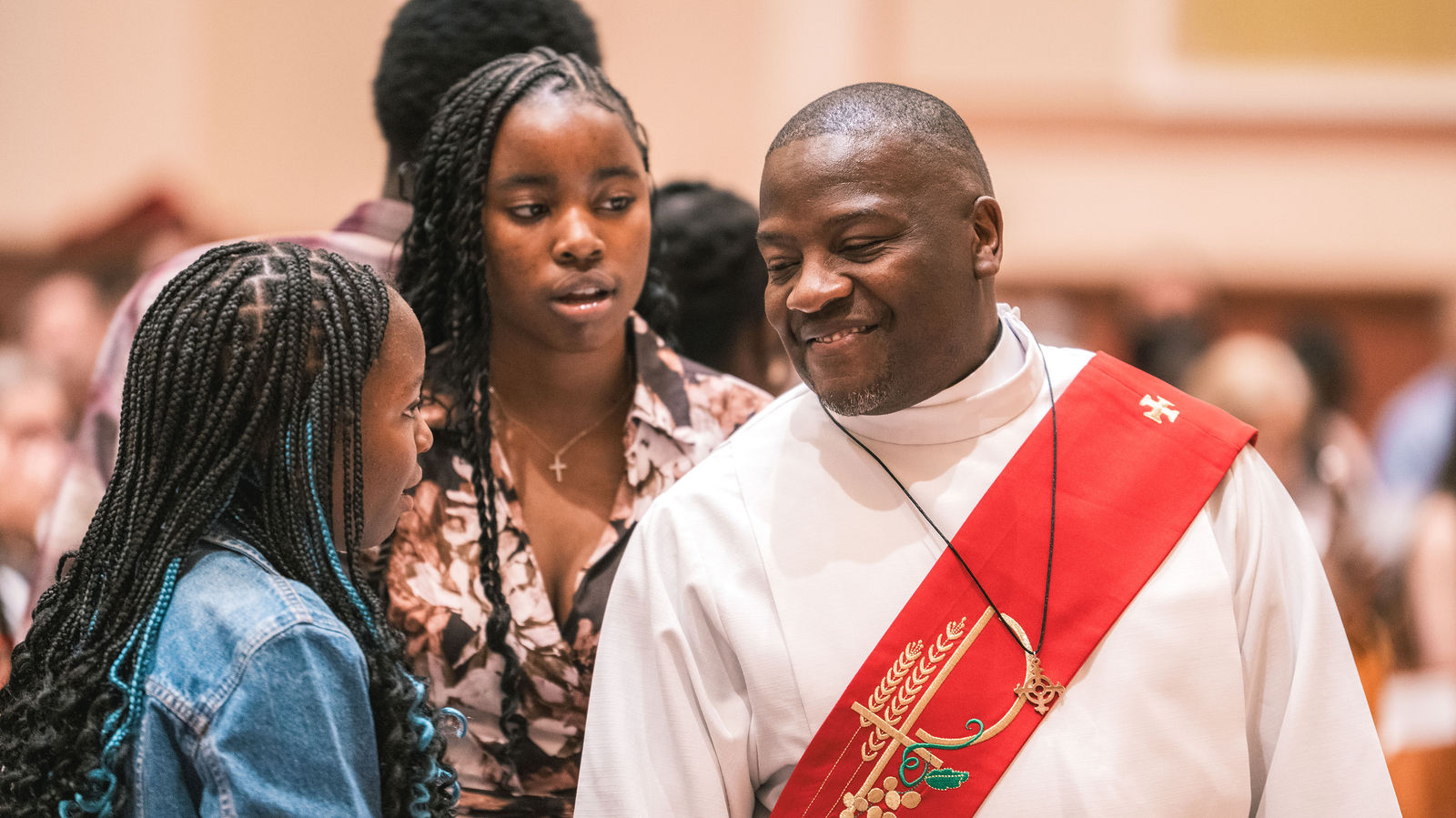
Home/Sending Parish: St. Peter’s Episcopal Church, Waltham
Recent/Current Placements: Bishop Alan M. Gates African-Episcopal Mission Center, chaplain and programs director; The Outdoor Church, Cambridge (CPE); All Saints Parish, Brookline (field education); Christ Church, Waltham
Upcoming Curacy: Strategic curacy at St. Paul’s Episcopal Church and St. Peter’s Episcopal Church
My calling
I’m originally from Uganda and moved here in 2015 right in the middle of winter. I grew up in the Anglican Church in Uganda, and with my grandfather’s advice of joining The Episcopal Church, I am happy to share that the Episcopal Diocese of Massachusetts has become an important part of my spiritual home.
I began to sense a call to ordained ministry shortly after the COVID-19 pandemic began. At the time, I was working in a nursing home during a season filled with fear, isolation, and grief. Because of restrictions, many patients couldn’t see their loved ones. I found myself praying with people, sitting with them, and simply being present in moments of loneliness and uncertainty, especially when most were at the end of their lives. Something shifted in me during that time. It opened my heart more deeply to ministry, to compassion, and to the quiet but powerful importance of presence.
I was also shaped early on by my grandfather’s brother, who was a priest in the Church of Uganda and served as rector at my home parish where I grew up. I spent time working with him and saw a kind of ministry that was grounded in humility, prayer, and care for the community. His example stayed with me and continued to grow in meaning over the years.
As an immigrant, I’ve become very aware of how important belonging is. Many people come to this country carrying stories of struggle, hope, and resilience. My story is part of that too. One of the things that drew me more deeply into The Episcopal Church was its commitment to stand with people who are hurting. I’ve felt called to help create spaces where people, especially immigrants and those who often feel unseen, can experience dignity, welcome, and real community.
Along the way, several congregations have shaped me, including The Outdoor Church in Cambridge, All Saints Parish Brookline, Christ Church Waltham, and St. Peter’s (my sending parish). I’m deeply grateful for the clergy and communities who have supported me. I began my formal formation at Christ Church Waltham with Rev’d Kapya Kaoma as my mentor and have learned a great deal about ministry from him. My Commission on Ministry advisor Graeme Mills has been a steady source of encouragement, guide, and a big brother who has looked out for me all the time. My field education supervisor, Rev’d Richard Burden, the rector of All Saints Parish Brookline, has been an important mentor throughout my formation.
I’m also very thankful for the Office of the Bishop and the diocesan staff. During some uncertain seasons, they supported me spiritually, emotionally, and financially. Their care helped me stay grounded and hopeful.
As I continue this journey, I’m grateful for the opportunity to serve in a strategic curacy at St. Paul’s Episcopal Church and St. Peter’s Episcopal Church. I see it as a meaningful next step in growing into the kind of ministry God is calling me to.
Significance of ordination
For me, this ordination to the diaconate feels both like a calling and a responsibility. It reminds me that God calls ordinary people, often through unexpected and even difficult experiences. Becoming a deacon is especially about serving those on the margins, building bridges between the church and the wider community, and helping people know they belong in the body of Christ. My CPE training with the Outdoor Church was a manifest of what it means for a church to be “felt” in the community.
As an immigrant, this moment also means a lot. It reflects a church that is open to recognizing gifts from many cultures and backgrounds. It’s a reminder that the church is stronger when everyone’s story is welcomed.
Hopes for the future
Therefore, as a deacon, I hope to serve with humility, compassion, and joy. I want to be part of creating churches where people feel seen, heard, and valued, no matter where they come from or what they carry.
I also hope to encourage young adults, immigrants, and those who feel disconnected from the church to discover that they have something meaningful to offer and that they truly belong.
Welcoming others
The Outdoor Church in Cambridge, ministering alongside unhoused neighbors, was an experience that changed me. I met people carrying deep pain, but also incredible faith, honesty, and resilience. Sitting together, praying, and sharing life helped me understand the Gospel in a deeper way. It continues to shape how I think about church. I want people to encounter a community where they are not judged by status, housing, background, or immigration story—but embraced as beloved children of God.
Sources of joy
One of the greatest joys has been seeing how relationships formed through ministry can truly transform lives and build real community. Whether during COVID-19, in ministry with unhoused neighbors, or through the African Mission Center, I’ve seen people find hope, healing, and belonging, and that brings me deep joy.
Deepening faith
My understanding of Jesus has become much more centered on presence and accompaniment. Earlier in life, I mostly understood faith through teaching and doctrine. But through ministry, especially with those who are sick, unhoused, or navigating immigration challenges, I’ve come to see Jesus most clearly among people who are suffering and searching for hope.
I’ve learned that sometimes the most powerful thing we can do is simply show up, listen, and stay present.
Alleviating suffering
There have been moments in my own journey when I experienced the church standing with me in very real ways. During difficult seasons, the diocesan community supported me with prayer, financial help, encouragement, and care. That showed me what it looks like when the church lives out God’s love in tangible ways.
There was also a time when our bishop announced that she was setting up a fund to help parishes with immigration issues during these hard times we are living in, this showed me that the church cares and takes responsibility for the marginalized with love and respect.
I’ve also seen this through ministry with unhoused neighbors in Cambridge, where people were treated with dignity and compassion rather than judgment. When a person from the streets shares that they have just been allocated an apartment after waiting for a very long time, that fills my heart with joy. Those moments showed me what it means for the church to stand with people who are hurting.
Becoming the diocese together
One of the things that I have always thought about church, is for its existence to be more felt than seen, in the community where it exists. What is the church doing, where does it stand on matters affecting the community? We should be more felt than just seen.
I also want people to see that the church belongs to all of us, not just clergy or longtime members. That means listening to people’s stories, honoring their gifts, and creating space for everyone especially young adults, immigrants, and those on the margins, to fully participate in the life of the church.
To me, “becoming the diocese together” means building relationships across cultures, generations, and experiences, and recognizing that we all have something to contribute.
Advice about pursuing ordination
My advice for people who may be feeling called is that, If you feel called, please don't ignore the quiet voice of God, even if the path feels uncertain. We must lean into the call—it may not be to the diaconate or priesthood, it may be to a different duty or responsibility as far as serving God is concerned. Just lean in. Stay open and allow yourself to be shaped by community along the way.
You also know that you don’t walk this journey alone. God often works through other people, family members, mentors, advisors, spiritual directors, and from experiences, to guide and strengthen you over time.
I want to thank my family, especially my wife Mabel, for being patient with me during my formation, for supporting my call and for praying with me all the time, in addition to my advisors, my professors and the parish communities that I have had an opportunity to connect with.
Nelson Adams Pike: "Respecting dignity of every human can set the world on fire”
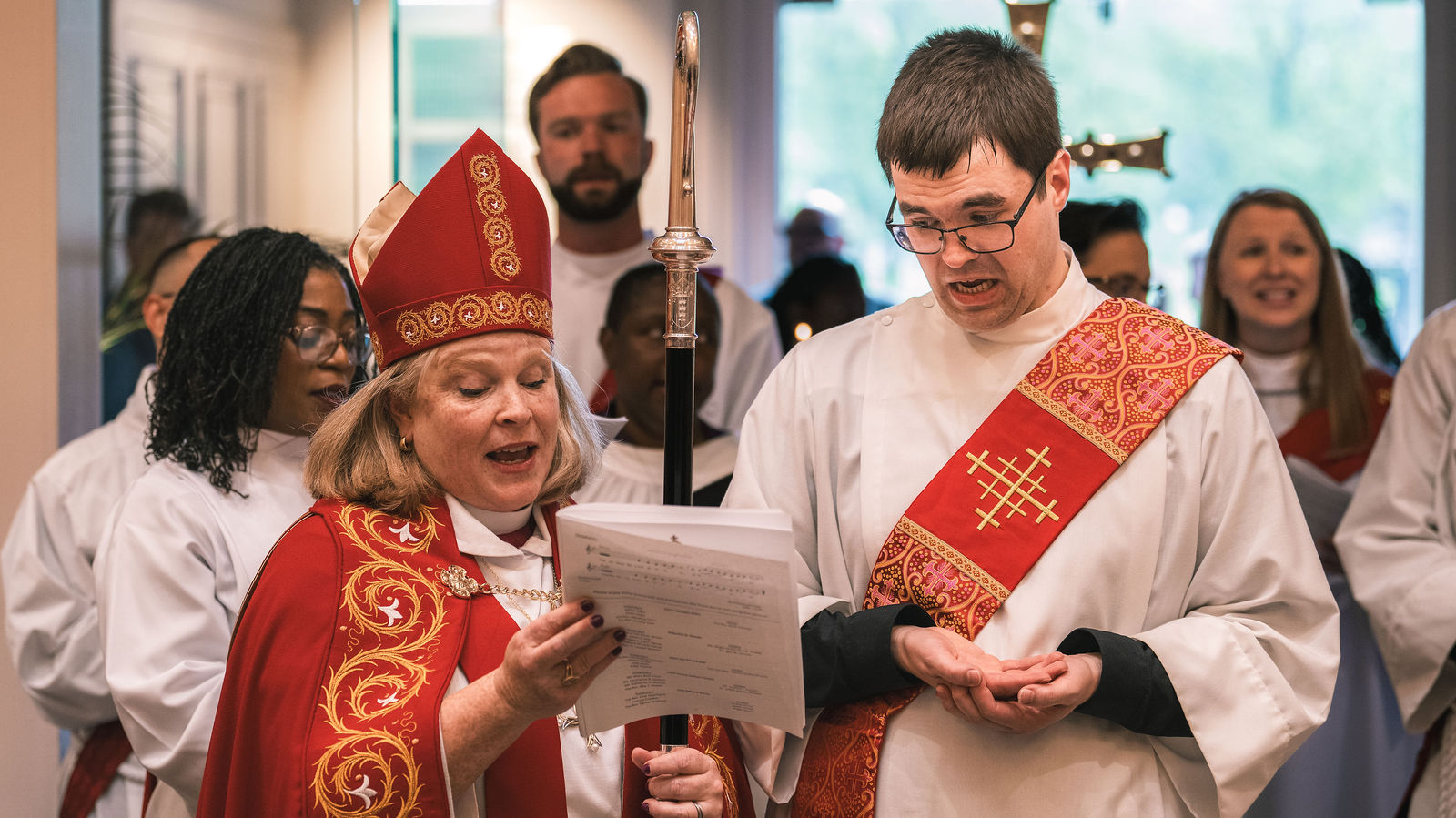
Home/Sending Parish: St. Mary's Episcopal Church, Rockport
Education: Berkeley Divinity School at Yale / Yale Divinity School (Master of Divinity); Saint Olaf College (B.A.)
Recent/Current Placements: Liverpool Cathedral, UK (YASC Missionary / Honorary Research Scholar)
Upcoming Curacy: St. St. Stephen's Episcopal Church, Cohasset
My calling
I was raised up in the faith at St. Mary's Episcopal Church in Rockport. I still recall the formation I received there (quite unknowing that that's what was going on) through the Catechesis of the Good Shepherd Sunday School program there. I was invited into liturgical, pastoral, and outreach ministry by the (now retired) rector, the Rev’d Karin E. Wade. A call to ordained ministry began then primarily in the liturgy, as I grew up around the Prayer Book and soaked up our tradition. I then studied history at St. Olaf College in Minnesota, where I intentionally began testing the call by exploring interests and possibilities beyond working for the church. But the sacramental ministry of the priest always seemed to be lacking in how I envisioned my life might look.
I served as a missionary of the Episcopal Church in Young Adult Service Corps in Liverpool, UK, after college, where I not only tested what working for the church might be like for me, but also began to learn about the wide expanse of our Anglican Communion, and our various connections around the world. I lived in the Tsedaqah Community of the diocese of Liverpool, a ministry of the Triangle of Hope partnership between the dioceses of Liverpool (UK), Virginia (US), and Kumasi (Ghana), dedicated to “helping God transform the long history, ongoing effects, and continuing presence of slavery in our world through: Repentance, Reconciliation, and Mission.”
I worked for two years (during COVID-19!) in Liverpool Cathedral, supervised in the cathedral food bank in the city centre serving both locals and asylum seekers, and began the discipline of the Daily Office (with Evensong!). When I returned to the US, in seminary at Berkeley at Yale (https://berkeleydivinity.yale.edu/), I began cultivating a daily discipline of prayer, lately in making the Spiritual Exercises of St. Ignatius, which renewed my prayer life and sense of God's presence always with me every day. I'm blessed that my home parish, and priest-in-charge, the Rev’d Dave Prentice, are presenting me for ordination.
Significance of ordination
No one is ordained by themself. Becoming a deacon is the culmination of a particular process, and of course, a joy and privilege for which I have prayed and hoped for a long time. I am also aware of the many souls who prayed me here, so to speak, many of whom have died, yet I know are celebrating with me “on a farther shore, and in a greater light.” There are so many people who have had a hand in this journey, but the greatest among them is Christ himself. My journey has been one with Jesus and one further into Jesus, in response to Christ's call to me. Discerning and being a disciple of Jesus are no easy tasks, but I am so humbled by this journey and the place to which it has brought me, by God's grace.
Hopes for the future
My hope as a deacon is first and foremost in Christ, undertaking his model of servant leadership out of love for, and obedience, to Jesus' own ministry. I am excited to learn and try new things as a clergy person and in a new context, and get to know my rector and supervisor, the Rev’d Maggie Arnold.
Welcoming others
My childhood in the church, spent in a wonderful and engaging Sunday school, then serving the liturgy as an acolyte, torchbearer, verger, chorister, thurifer, and preacher once in high school, was possible because of the welcome and investment my parish provided and made in me. Ministry both formed my relationship with Christ and called for a corresponding commitment to Christ and the church. Welcoming others, I envision, both provides a place of welcome and invites people into the various ministries of the church, especially those beyond the liturgy.
Sources of joy
One of the greatest privileges of being formed for ministry is the deep, beautiful kinship I've developed with my peers. Formation takes all we have, and on the harder days, sharing with those also undertaking this path has provided built-in networks of support I pray will continue into future ministry. Relying on these bonds when you need to is a really important reminder of the communal nature of the church's ministry, especially when we can feel siloed sometimes just by the nature of the work!
Deepening faith
My own faith has grown exponentially, almost unrecognizably. The art of undertaking seminary formation, I'd say, forces the asking of the question with a particular urgency: “How much are you willing to do in Christ, not by your own self? How complete can my obedience be to his will, and placing my whole self in his care?” Ideally, the answer is, anything and everything. But those parts of the soul that we'd rather not show Him, the bruises and rougher edges, take time for us to be able to place even our inabilities and failures at his feet, in the faith and hope of his wondrous Resurrection. That, really, is a lifelong process of formation. But I can only do it by the grace I have received in trying to do it so far.
Alleviating suffering
While a supervisor in a food bank, I remember one encounter of watching two volunteers help put together a food parcel for a food and housing insecure young student. The student burst into tears at the shame she felt in needing the support. The volunteers assisting at table were kind and gentle, reassuring, and listened to the particularity of the situation and made sure the food provided was appropriate. Feeding the hungry is such a basic command of Christ, but with poverty comes shame. The church's ministers (lay, in particular, as well as the ordained) have such a beautiful opportunity offering the ministries of a listening ear and compassionate kindness. This ministry of respecting the dignity of every human being, from our baptismal vows, can really set the world on fire—and really bring comfort to those who may not get it anywhere else.
Becoming the diocese together
Like the way I was brought into the church, invitation into Christian community provides both room to be and then to grow, in the various ministries we engage in response to Jesus' call. It is the ordained ministry, in particular that of the Bishop, that binds us both as a body in the diocese and commissions our ministries in the name of Christ himself, whose Spirit has lighted upon the Church down the centuries to today. Christ will be present when we pray to him in worship, and also in our service to others out of love for them, and by extension, our love for Christ. That is the beautiful mystery that connects all our various ministries, outreach, liturgical, musical, whatever have you, into both our common, communal life, and the life of Jesus, continuing today through us.
Advice about pursuing ordination
No one is ordained, no one does any ministry, on their own. The first and foremost person in our life and ministry is Jesus Christ. Pray to Jesus, who loves us, cares for us, and calls us (yes, even you and me, even now) to serve him. And ask and pray amongst the worshiping community of which you are a part, especially the clergy, as you pray and discern about how God may be calling you. It is a risk to trust in God and consider any ministry in the Church. But, in the wisdom of the Holy Spirit, we discern together as a Church how God calls each of us. Stay close to Jesus, and love Jesus, as he will guide your steps to the future already prepared for you.
Alec F. Vaughn: "Be a witness to the light”
Home/Sending Parish: Trinity Church, Boston
Education: Boston University (international relations); Boston University School of Theology (master of divinity)
Recent/Current Placements: St. Barnabas's Memorial Episcopal Church, Falmouth, seminarian; Tennessee Valley Healthcare System Veterans' Hospital, chaplaincy fellow; Vanderbilt University Medical Center, CPE chaplain resident
My calling
The beginning of my call to ministry comes from listening and exposure. Exposure to the larger world and to see God's hand at work in it and saying, “Yea, I want to be a part of that, too.” I was a freshman in college exploring the large swathe of Commonwealth Avenue that is Boston University's campus, and I came across Marsh Chapel, which in many ways opened up a vision for my life, one dedicated to service and fostering community. It was there that I met the Rev’d Dr. Karen Coleman, University Chaplain for Episcopal Ministry, who, as we got to know one another, opened my life up to Trinity Church in the City of Boston and the wider Episcopal Diocese of Massachusetts. As a Marsh Chapel Fellow during my senior year at Boston University and regular attendee at Trinity Church, I began to explore the breadth and beauty that is The Episcopal Church. Through liturgy, prayer, book groups, and hands-on ministries in the Boston area communities, I became more aware and conscious that my life was called towards one of service.
I am inspired by the many members of my family and community who served in the armed forces and dedicated their lives to service and thought I would follow the same path. Studying international relations, I had a passion for exploring other countries, cultures, and government service. It came to me through thoughtful exploration and reflection that my form of service would be shaped through my church experiences both as a youth and at the time young adult.
Growing up in Chatham on the sandy beaches of Cape Cod, I had my first exposure to The Episcopal Church and church in general at St. Christopher's, where the youth group would participate in a food-based ministry called Faith In Action. In this space I first learned about service to others and one's community, even if it meant serving the stranger. That is where I find myself today as I reflect on our ordination to the transitional diaconate. We are called to go forth and serve. We are called to bring the presence of Christ into the world, especially to the weak, poor, and the stranger.
As I prepare to complete my chaplaincy fellowship at the Tennessee Valley Healthcare System Veterans' Hospital, I think of the people I have ministered to who have vastly different life experiences from me and how we are able to find common ground, restoration, and healing. It has been an honor to learn from and minister to veterans and meet the diverse community that makes up our armed forces past and present.
Hopes for the future
My hope in serving the church as a transitional deacon is reflected in my parish experiences, especially at St. Barnabas's Memorial Episcopal Church, where I was a seminarian and mentee of the Rev’d Will H. Mebane Jr. and the congregation and community. I was drawn to St. Barnabas's as a divinity student while completing my master of divinity at Boston University School of Theology, primarily by the preaching and prophetic message of Rev’d Will, who mentored and taught me to not be afraid to preach the truth. For two years I was involved in the liturgical and programmatic life of the “St. B's” community, which spread far beyond its church doors. An energetic and open arms community, you could come by St. Barnabas's any day of the week and there were events, services, and community outreach to the wider Falmouth and Upper Cape.
We welcomed new people to our spaces, embraced diverse traditions and people, and had a lot of fun in it all! It is my hope as I enter parish ministry as a transitional deacon, that I can foster these same creative elements I learned at St. Barnabas's and bring the personal touches that I have learned as a chaplain fellow at the VA and as a CPE chaplain resident at Vanderbilt University Medical Center.
Sources of joy
A real joy for me, especially following the COVID-19 pandemic, has been engaging with people and fostering community. As we have come back from a time of separation and isolation, we have learned to laugh, love, mourn, and be present with one another as a church. I have found a profound joy in being present for the many pastoral services, liturgies, services, and visitations I have been a part of. I feel called and supported by The Diocese of Massachusetts to foster this community and continue the work going back to the early disciples.
The thread that runs through time going back to when Jesus of Nazareth began his public ministry is one of fostering a common life with uncommon people. Jesus showed us, showed me, that it is okay to be unique, authentic, and be yourself and you will meet others to walk alongside you in this life. That is where Christ's presence is made tangible. My hope, joy, and ministry are one of hospitality in making all who come into my life feel welcome and that they are a part of something larger than themselves. All are welcome. That is who we are as Episcopalians. I am touched to be entering my ordained life in this time where the world cries for unity, peace, and love.
Advice about pursuing ordination
It is my hope for anyone considering entering ordained ministry that you consider this question: “How can I be a beacon of God's love in this moment? How can I be a witness to the light?”
Words of thanksgiving
I'd like to thank the Rev’d Kit Lonergan, my sponsoring priest who has guided me through the process to ordination. the Rev’d Dr. Karen Coleman, who opened my eyes to Christ's calling in my life. the Rev’d Will H. Mebane, Jr. who taught me to be my authentic self. the Rev’d Brian McGurk, who planted seeds in my spiritual life as a youth and shepherded me through the passing of my mother. Rev’d Dr. Elise Feyerherm, my Episcopal professor and mentor at Boston University. The Rt. Rev’d Alan M. Gates, who accepted me into this process as a Postulant and welcomed me. The Rt. Rev’d Gayle Harris, who confirmed me at Trinity Church in the City of Boston.
I would like to thank my dad Stewart Vaughn and mother Susan Westfall, who have given me the best and pushed me to become who I am today. I give thanks for my brothers Evan and Patrick, my two first friends on Earth who have supported me in my growth as a man and minister of the Good News of Jesus Christ, and how to have fun. Ali Crockett, who has been a second mother to me. Karen Barwise, who has been a blessing in my life. I give thanks for my Boston University friends, professors, and community, who have prepared me for the large and diverse world and taught me to approach life with curiosity and fascination.
I am thankful for the community that has embraced me during my time continuing my education and growth in Nashville. The Vanderbilt University Medical Center, especially the Department of Spiritual Care and its chaplains, The Tennessee Valley Dept. of Veterans Affairs Chaplain Service. My CPE educators Fred, Peter, Frank, and Maureen. For Christ Church Cathedral in welcoming me to its pews, especially the young adult group. Finally, I would like to thank The Rt. Rev’d Julia E. Whitworth, Bishop Diocesan of The Episcopal Diocese of Massachusetts for the honor of bestowing Holy Orders on my ministry and accepting me into this sacred order of deacons.
Jason Von Ehrenkrook: "Embrace your inner uncertainties and doubt"
Home/Sending Parish: St. Chrysostom's, Quincy
Education: University of Michigan (Ph.D. in Jewish and Christian Origins)
Other Career: Associate Professor of Religious Studies at UMass Boston
Upcoming Curacy/Placement: Part-time curate at Grace Episcopal Church, Newton
My calling
My discernment process has been anything but a straight line. I was brought up in an extremely conservative Baptist church and felt an initial stirring to pursue pastoral ministry within that context. I eventually enrolled in a Baptist seminary where, somewhat ironically, the threads of my childhood faith began to unravel. Seminary triggered an intellectual curiosity that simultaneously fed the beast of theological doubt. I gradually came to the conclusion that the dogmatism and certainty of the Christianity in which I had been nurtured was untenable. I finished seminary with a master of divinity and an acute realization that the divine, if there is one, cannot be mastered.
After seminary, I remained fascinated by human religiosity and decided an academic path in religious studies was a good way to scratch that itch. I went to the University of Michigan for graduate school, where I took a Ph.D. in Jewish and Christian Origins. And I loved every minute (well, most of the minutes) of my experience in graduate school. And then after graduate school, my first teaching gig was a four-year stint at the University of Pittsburgh, and now I've been at the University of Massachusetts Boston since 2014.
Within the first few months of my life as a university professor, I knew I had discovered my calling. I loved my work in the university classroom and was thrilled at the opportunity to stimulate the minds of undergraduate students. All these years later, that thrill still remains, although the AI devil has added some frustration to that thrill, I must confess.
With that strong sense of a calling to the life of academia, the prospect of a calling to ordained ministry took me by surprise. My move to the Boston area nudged me into Episcopalian waters for the first time at St. Chrysostom’s in Quincy, my sponsoring parish, where I was able to reconnect with faith and to nurture a spirituality compatible with my intellectual work. And the more involved I got at St. Chrysostom's, the more I sensed whispers of a possible bivocational calling from the beautiful people within that community. These whispers ultimately led to the formation of a parish discernment committee whose members (Sean Coleman, Anke Thorne, Judy Keith, and Ross Dekle), along with the Rev’d Chris Capaldo, prayed with me and interrogated me and guided me as I grappled with this question of a call to ordained ministry.
Given my full-time work in the university and the fact that I had already earned an M.Div., the diocese put together a unique and somewhat flexible plan for me that included an initial year in the diaconal formation program at Bethany House in Arlington, where I was able to develop life-giving friendships with the members of my cohort (thanks Jocelyn Collen, Robert Christian, Pia Bertelli, and Jason Kinchen!) But the most crucial part of my formation has been my two parish internships: first at All Saints Church in Brookline, working under the supervision of the Rev’d Dr. Richard Burden, and then two years at Grace Episcopal Church in Newton, where I was privileged to minister under the direction of the Very Rev’d Tammy Hobbs Miracky.
These experiences have been rich and rewarding, with each internship stretching me into new areas of ministry. I'm grateful for this hands-on learning within the context of parish ministry, for the mentors who have contributed to my spiritual and intellectual growth, and for the many parishioners in each context who have propelled me forward in this process of discerning God's call. They have all played a vital role in helping me understand my sense of a calling to be a public witness to a gospel centered on love and human dignity.
Balancing careers
I'm called to bivocational ministry and as I transition into ordained life I will continue to work full-time as an Associate Professor of Religious Studies at UMass Boston. How will I balance the demands of these two vocations? Good question! I'm at the beginning of this journey so I imagine I'll be learning as I go how to set boundaries and, conversely, how to say no when my occupational plate is already too full. I'm grateful to be starting ordained ministry as a part-time curate at Grace Episcopal Church in Newton, which will offer me an optimal setting in which to continue to learn and grow.
Significance of ordination
This ordination moment feels weighty in a national context marked by injustice and violence, a context in which powerful people dehumanize and exploit the vulnerable while hiding behind pious sounding scriptural rhetoric, cynically elevating a version of Christianity as a central protagonist in a quest to consolidate more power and manufacture more enemies to repress. I am convinced that I and my fellow ordinands are stepping into vitally important work as we seek to amplify an alternative version of the Christian faith, a faith marked by intellectual rigor and spiritual vigor, a faith grounded in the teachings of Jesus and the Hebrew prophets and their robust vision of justice for the most vulnerable, a faith defined by an extravagant love that reaches beyond familial and national boundaries, a faith that sees beauty and dignity in all humanity, a faith that pursues healing for all creation.
Hopes for the future
My hope is to fully live into this diaconal role, to not simply see this as a stepping stone to the priesthood but to deepen my understanding of the sacred order of deacons, to appreciate the joy in serving others, to better learn how to connect the parish and its people to the needs of the wider community, and to help foster a vibrant parish invested in the work of loving our neighbors while collectively sharing life's burdens and celebrating life's joys.
Advice about pursuing ordination
I'm thinking of a pivotal moment during my parish discernment process when one of the committee members asked me, “Jason, has God called you to ordained ministry?” To which I responded, “I don't know, you tell me.” While that response may on the surface sound flippant, it was an honest reflection of the uncertain state of my mind going into the discernment process, and the theological questions I had about the notion of a divine calling: How does the ineffable communicate their will? And how can humans, with all of our complicated perceptions, biases, influences, and motivations, genuinely discern the divine will? My advice: embrace your inner uncertainties and doubt. These are healthy. And listen carefully to the many ways the divine spirit may be speaking through the voices of others within your spiritual community.