
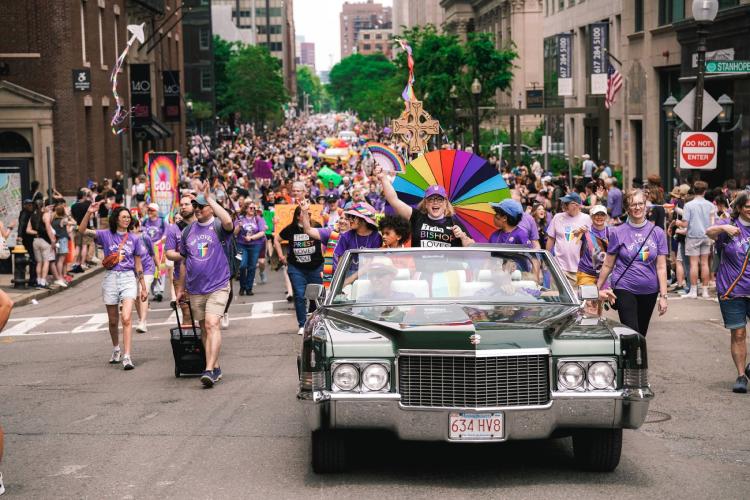
When hundreds of Episcopalians marched from Copley Square for the June 2026 Boston Pride parade, they carried a unified diocesan banner, large Holy Spirit doves, and a clear message on each T-shirt: “God Loves You. No Exceptions.” Along the route, the marchers saw spectators pausing in tears, waving, and some shocked looks. All because a church showed up to offer love, blessings and hugs to LGBTQ neighbors.
In front of them, Bishop Julia Whitworth waved, from the back of a vintage Cadillac convertible. For her, the parade was a necessary, outward-facing declaration of faith.
“So much of the Christian community has been co-opted by messages of hate for LGBTQ people, and so it's very important that we stand for the dignity of every human being, and we show that by showing up during Pride,” Bishop Whitworth said. “My favorite part of Pride is seeing people visibly moved by being told that there's a church that loves and blesses them.”
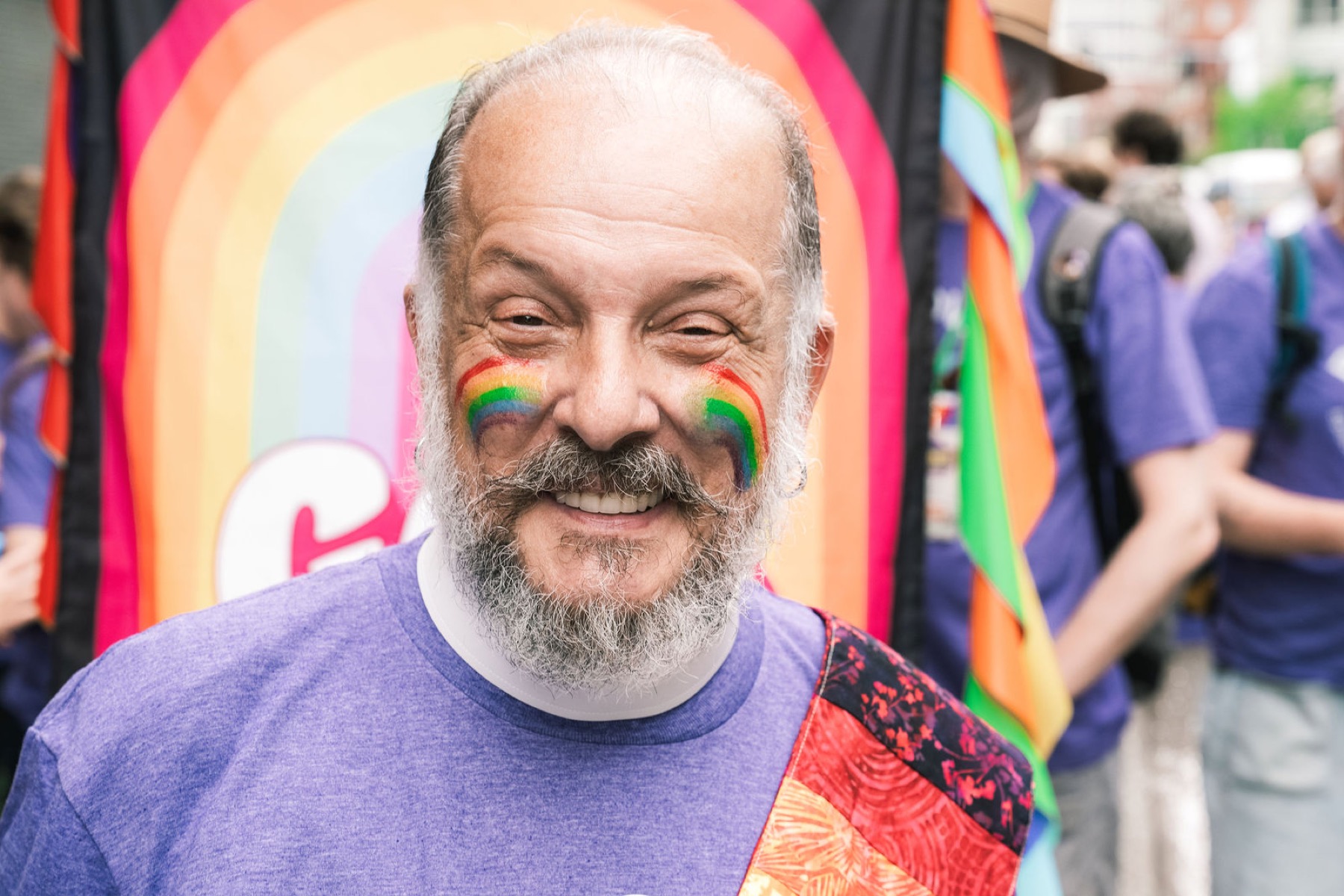
Though Massachusetts has a progressive reputation, clergy and lay people across the diocese regard the rainbow flag as a signal but not a destination. Persecution of the LGBTQ+ community—in particular transgender individuals—has intensified across the nation and in local towns, challenging the diocese to move past surface welcome into the trenches of pastoral care and community organizing.
This movement is not a top-down mandate. Instead, it is about “becoming the diocese together,” a process that aligns a shared diocesan vision with the realities of unique local ministries—strengthening a common identity while honoring local diversity.
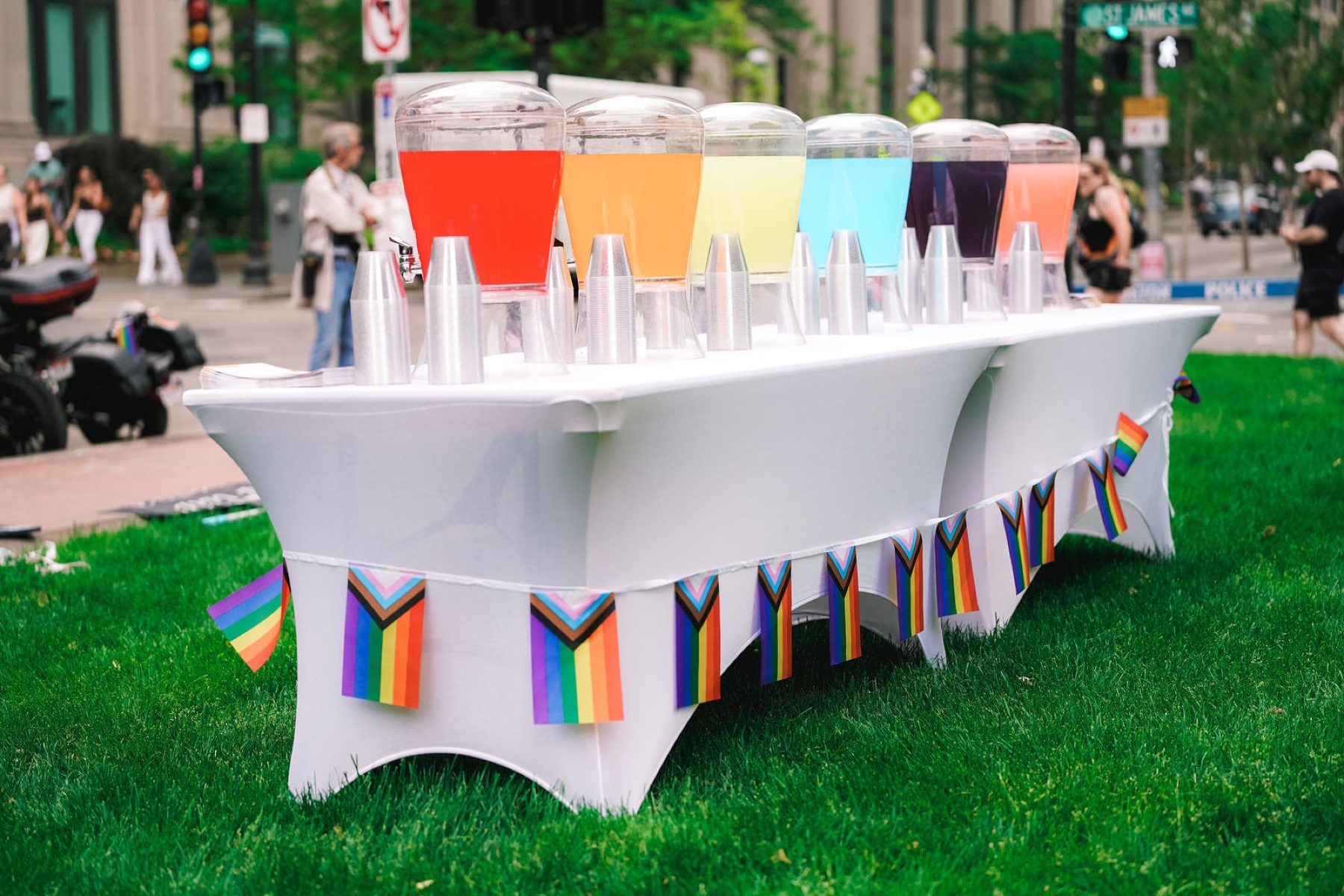
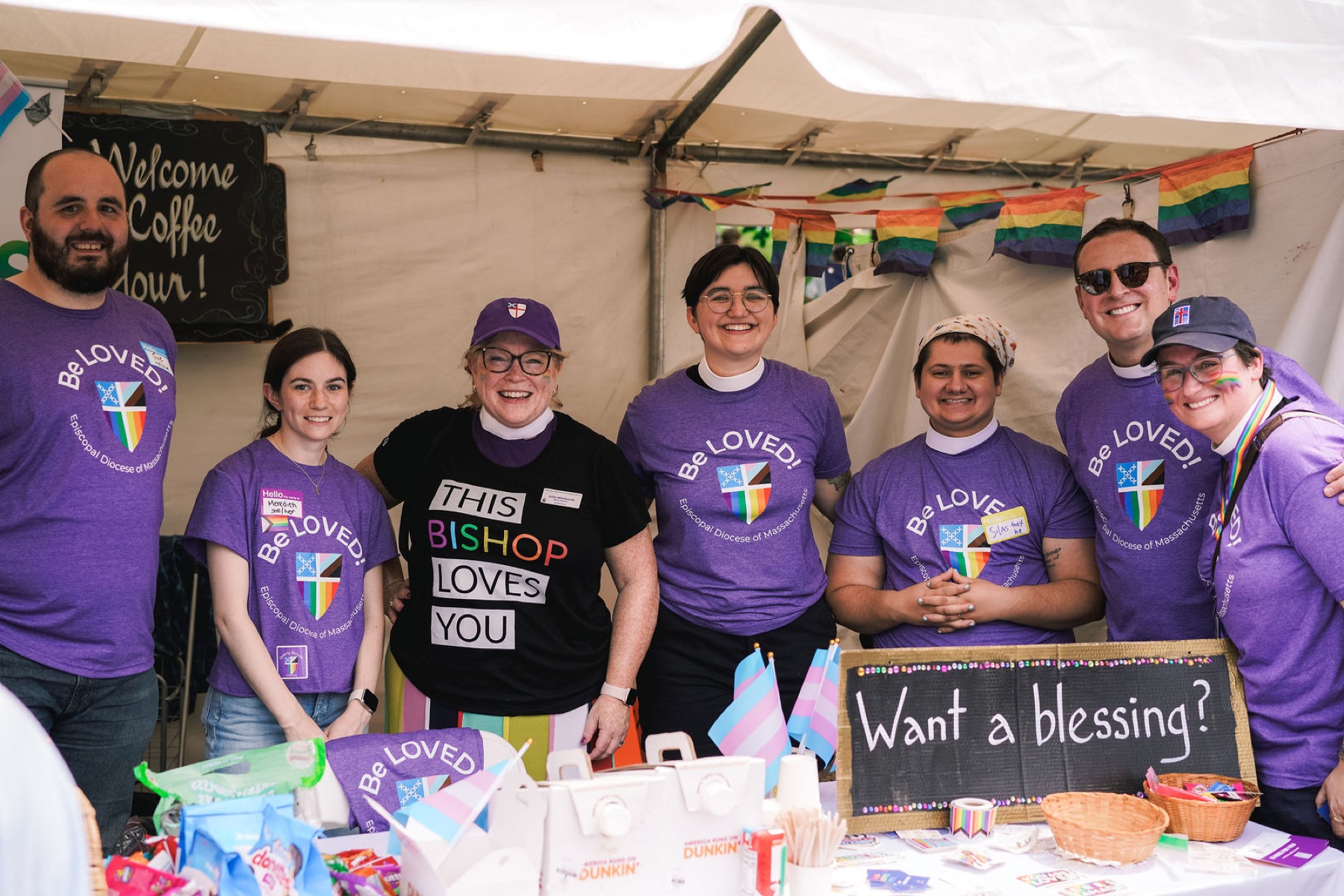
Following the main parade, diocesan hospitality took physical form at the Boston Common festival, with a “Come to Coffee Hour” table complete with classic church finger food, games, stickers, and prayer chaplains on hand.
The Cathedral Church of St. Paul opened its doors, partnering with The Crossing to host quiet spaces inside for neurodivergent individuals, while bubble blowing and art making unfolded on the steps.
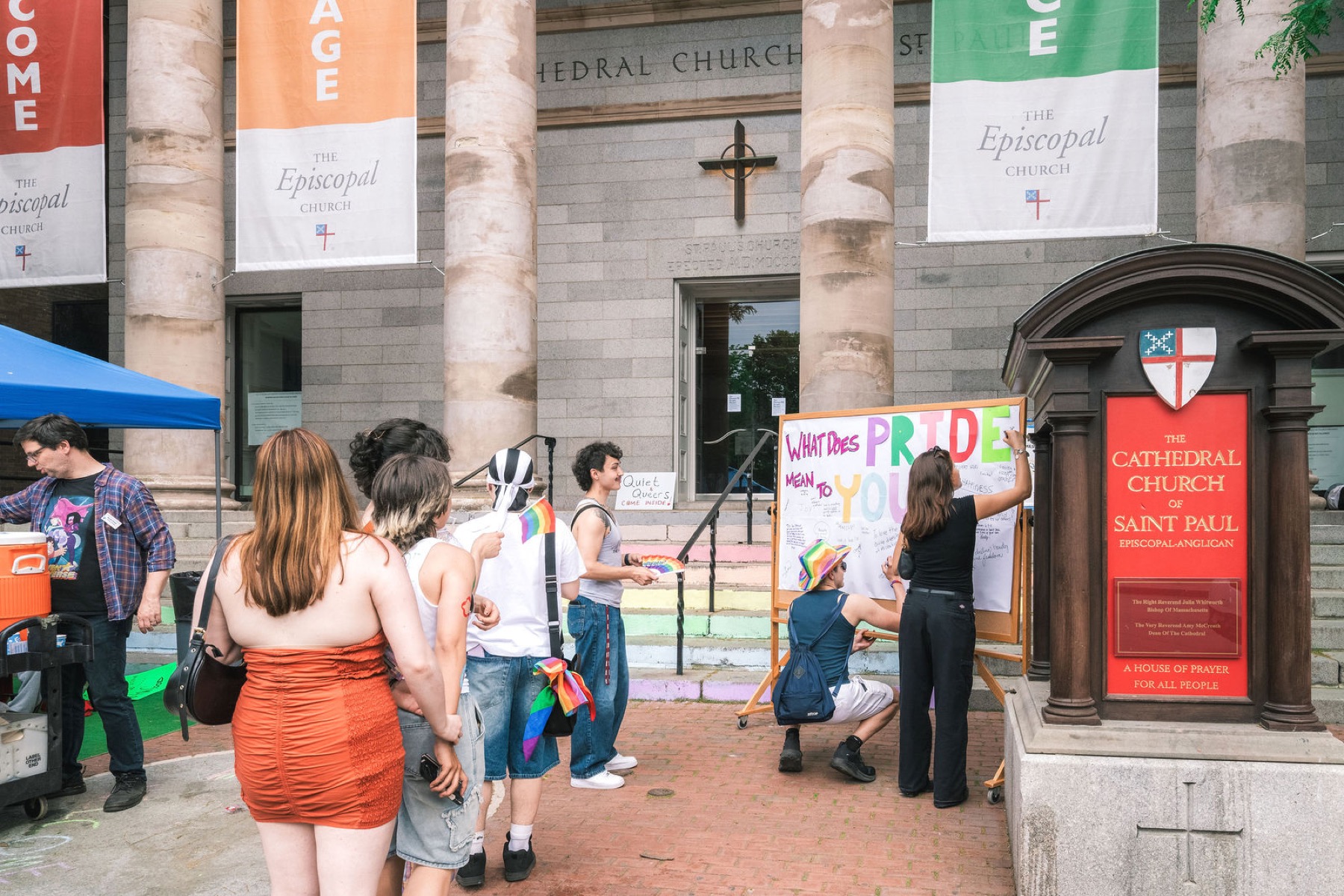
Beyond Boston, this contextual support manifests in ways as distinct as each community. Meet four parishes living out their witness with and for LGBTQ people in their areas.
St. Andrew’s, Ayer: Structural connections in a small, diverse parish
Located near the western border of the diocese, St. Andrew’s in Ayer is a small, historic, growing parish that thinks like a community organizer. Their parishioners, Tommy Warner and Kierk Dudman, lent their vintage Cadillac to carry the bishop through Boston, celebrating the vehicle just a week before it served as the backdrop for the first same-sex marriage in the parish's history.
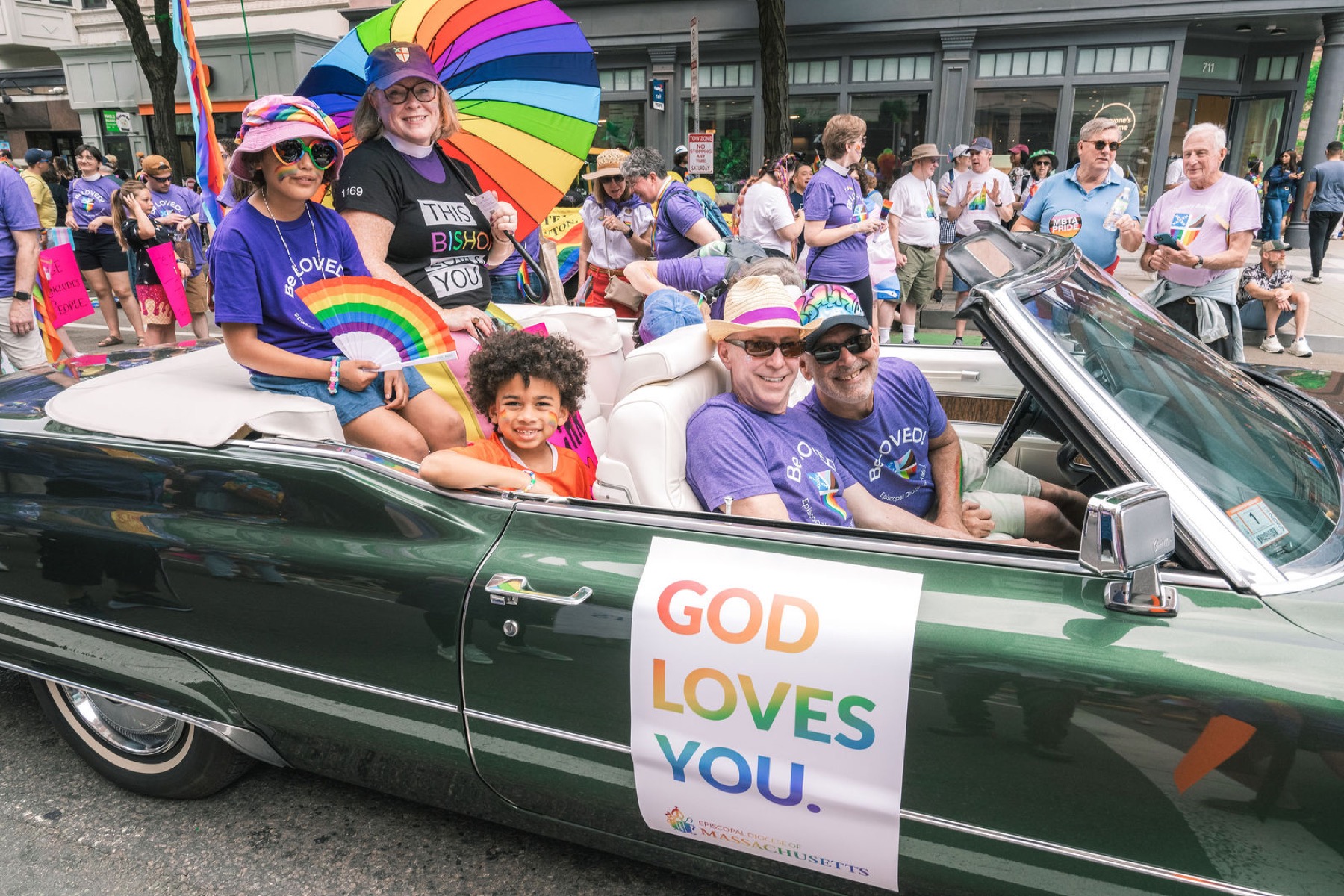
Led by the Rev. Mia Kano (known to all as Rev. Mia), the parish views Pride as a path for structural connection with nearby, diverse houses of worship. By connecting through Pride, these congregations are ready to respond to hurt and violence against any one of them. As an example, when a parish in nearby Acton had their Pride fish sign vandalized, the communication infrastructure was prepared to offer a network of witness and healing.
For St. Andrew’s, inclusion has become intense and personal. Through collaborative trans-inclusion workshops developed for the diocesan convention, the parish has expanded political advocacy into deep spiritual care. The congregation is looking forward to its first liturgical service of renaming for a parishioner stepping into her true name as a trans woman.
“You are welcome as you are, which is a different message than people get out of the churches that say you're welcome and you're gonna need to change,” says Rev. Mia. “Your relationship with God is true and authentic when you embrace your true and authentic self.”
St. Mary of the Harbor, Provincetown: Invitations for the other six days too
In Provincetown, a historic LGBTQ+ epicenter, St. Mary’s does not have to convince the town that queer people exist; instead, the challenge is countering deep religious trauma. The Rev. Brian Raiche, who arrived in 2023, has focused on a simple philosophy: stop waiting for people to walk through the church doors on Sunday morning, and invite them warmly to a lowkey fabulous event.
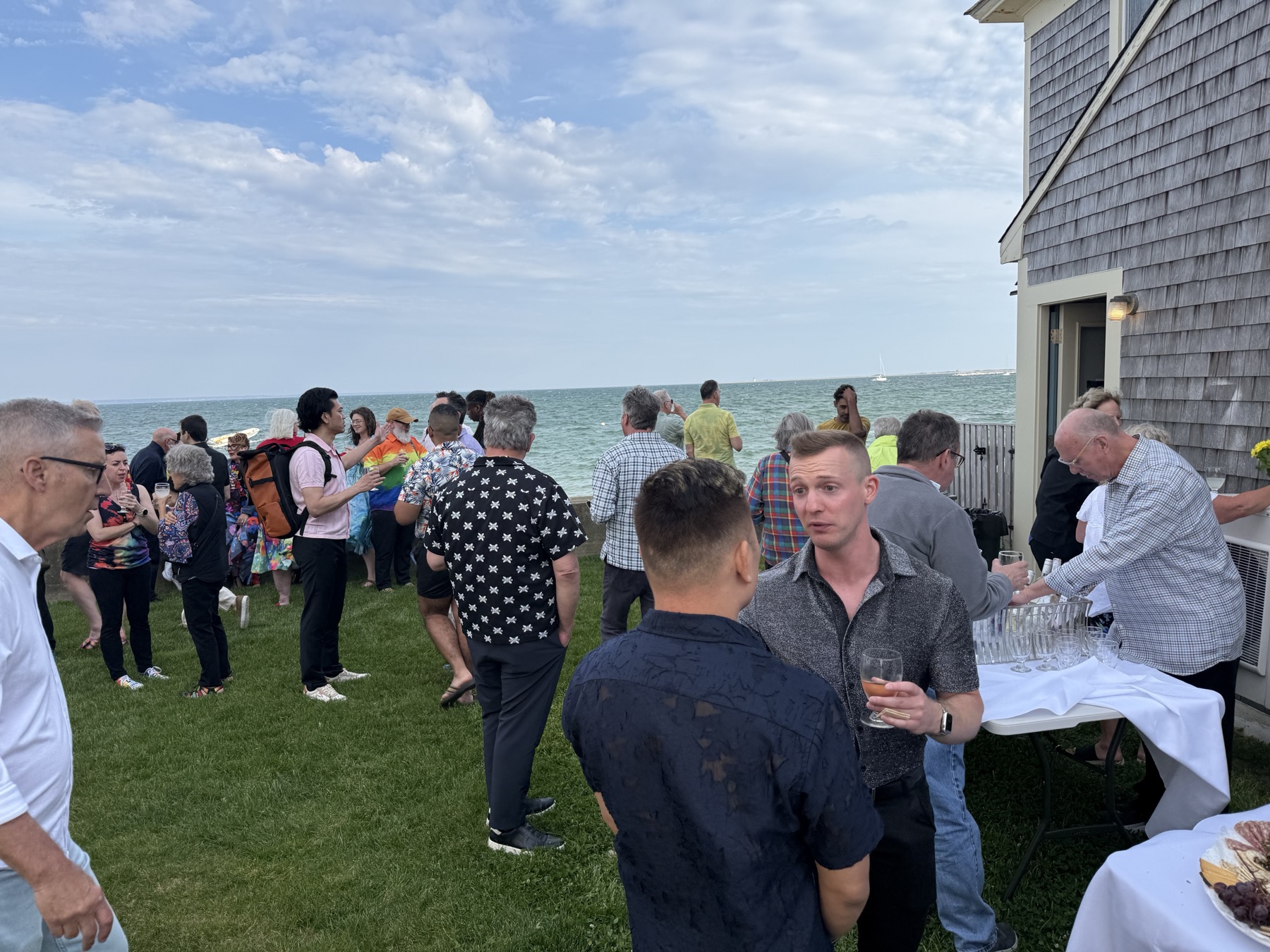
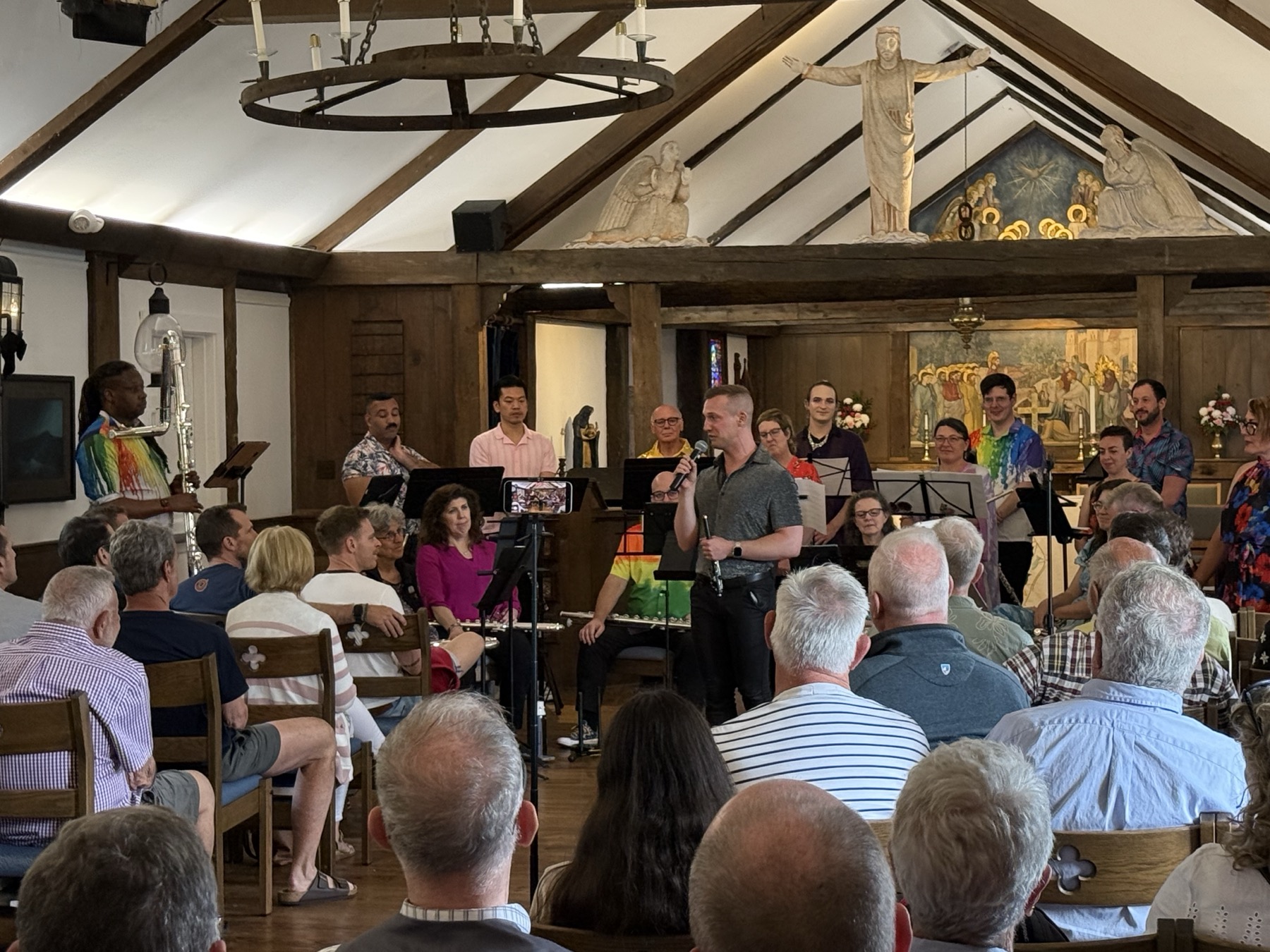
Under his leadership, the parish has doubled its stewardship and added 30 chairs to its sanctuary to accommodate year-round growth. They achieved this by borrowing from P-town’s distinct culture—like bringing in talent like Frankie Campofelice, a popular singer in local clubs and piano bars, to lead the Sunday choir. Throughout the season, St Mary’s offers popular community programming, from hosting a national LGBTQIA+ Flute Choir concert to co-sponsoring a screening of the documentary Communion with the Provincetown Theater. Most events are free, with an offering for those who want to contribute.
St. Mary’s is also expanding its definition of neighborliness and embodying its motto of “where the land, the sea, and the sacred meet.” When an adjacent building was converted to house 45 international J-1 seasonal workers—mostly Orthodox Christian and Muslim students from Bulgaria—the church reinstalled stairs over the seawall to grant them direct beach access. They opened the sanctuary doors during the day so the overworked students could find quiet space to decompress.
On July 27, a parish event is featured on the official town calendar: a free beachside pancake breakfast for the international Family Week gathering. Last year nearly 600 families and more than 1,300 individuals attended Family Week, making it the world’s largest gathering of LGBTQ families.
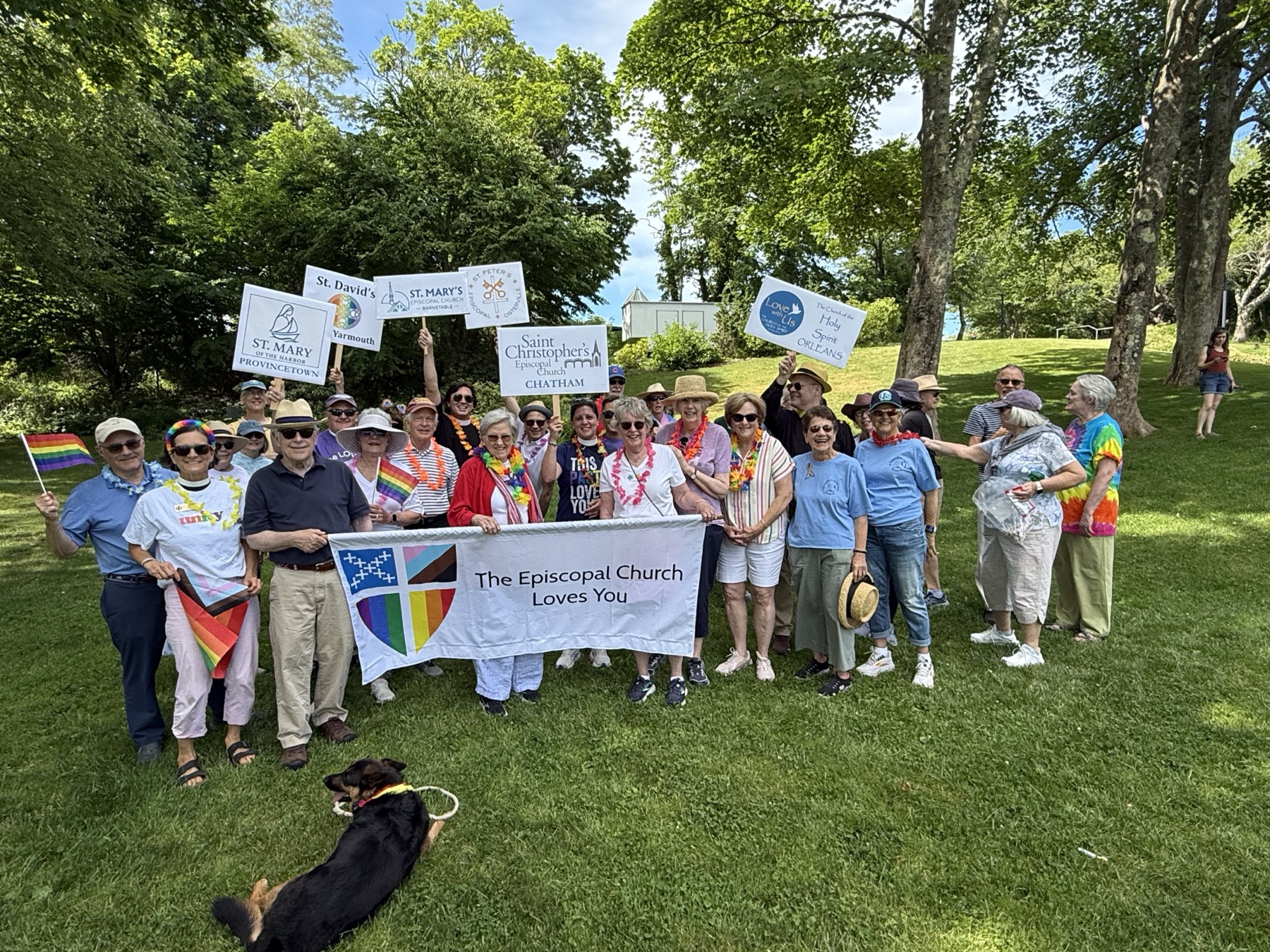
“We're not trying to convert anyone,” Raiche said. “We just want people to know that the church can be a source of joy and hospitality, not just judgment.”
Church of the Holy Spirit, Fall River: Radical admin support in a conservative-leaning town
In Fall River, a conservative-leaning city south of Boston, the political and cultural landscape presents different hurdles for the LGBTQ community and churches who seek to support them. For one, street preachers with bullhorns often target local Pride events. But Church of the Holy Spirit, led by the Rev. James Medley, remains staunch in its support, especially as a needed administrative anchor for the local Pride committee.
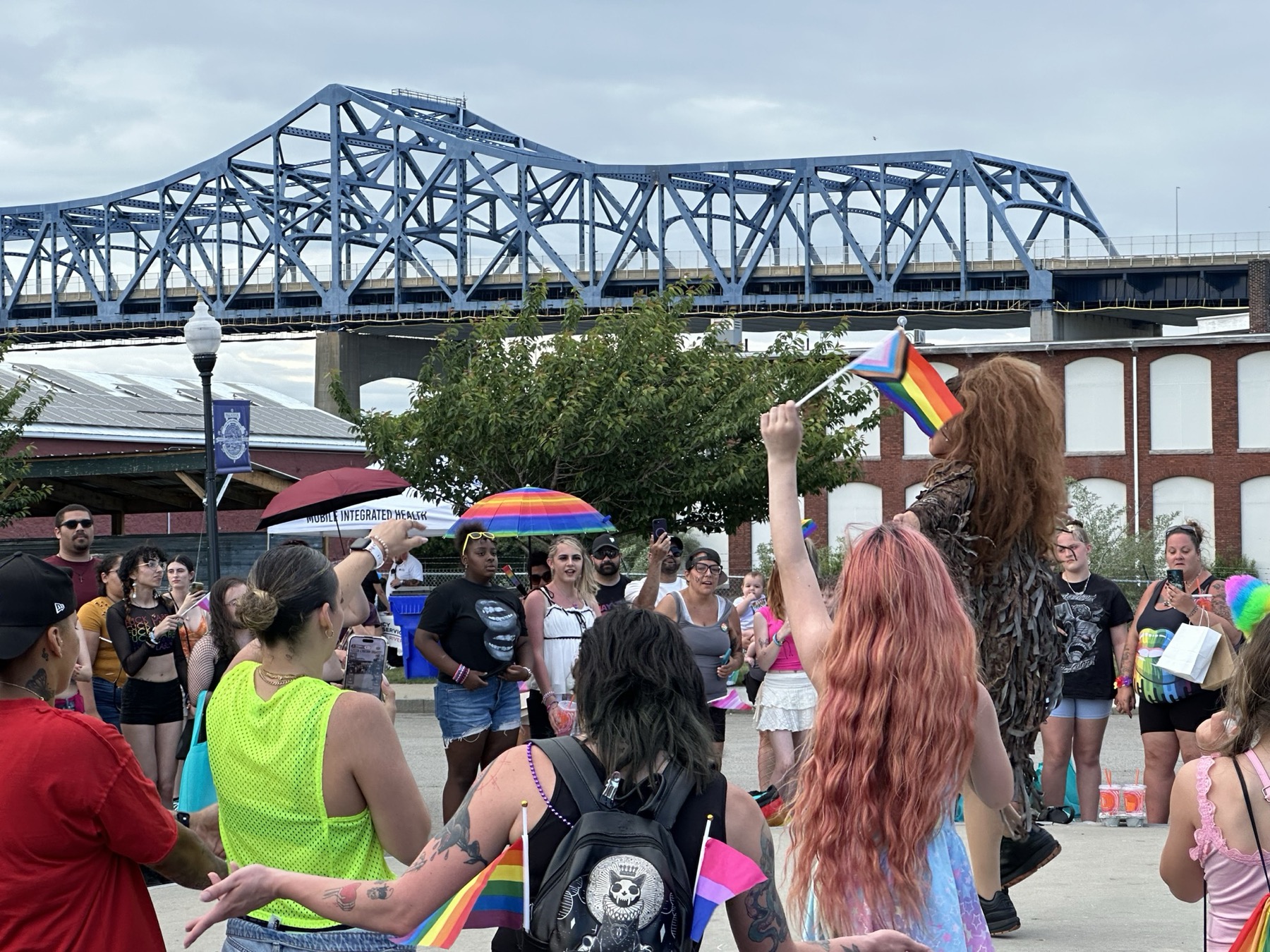
The Fall River Pride Festival Committee is not a 501(c)3 nonprofit, so when it lost its regional fiscal sponsorship, Father James and the vestry made a swift, unanimous offer to welcome the committee under the administrative purview of their church. Today, Fall River Pride operates as an official committee of the parish.
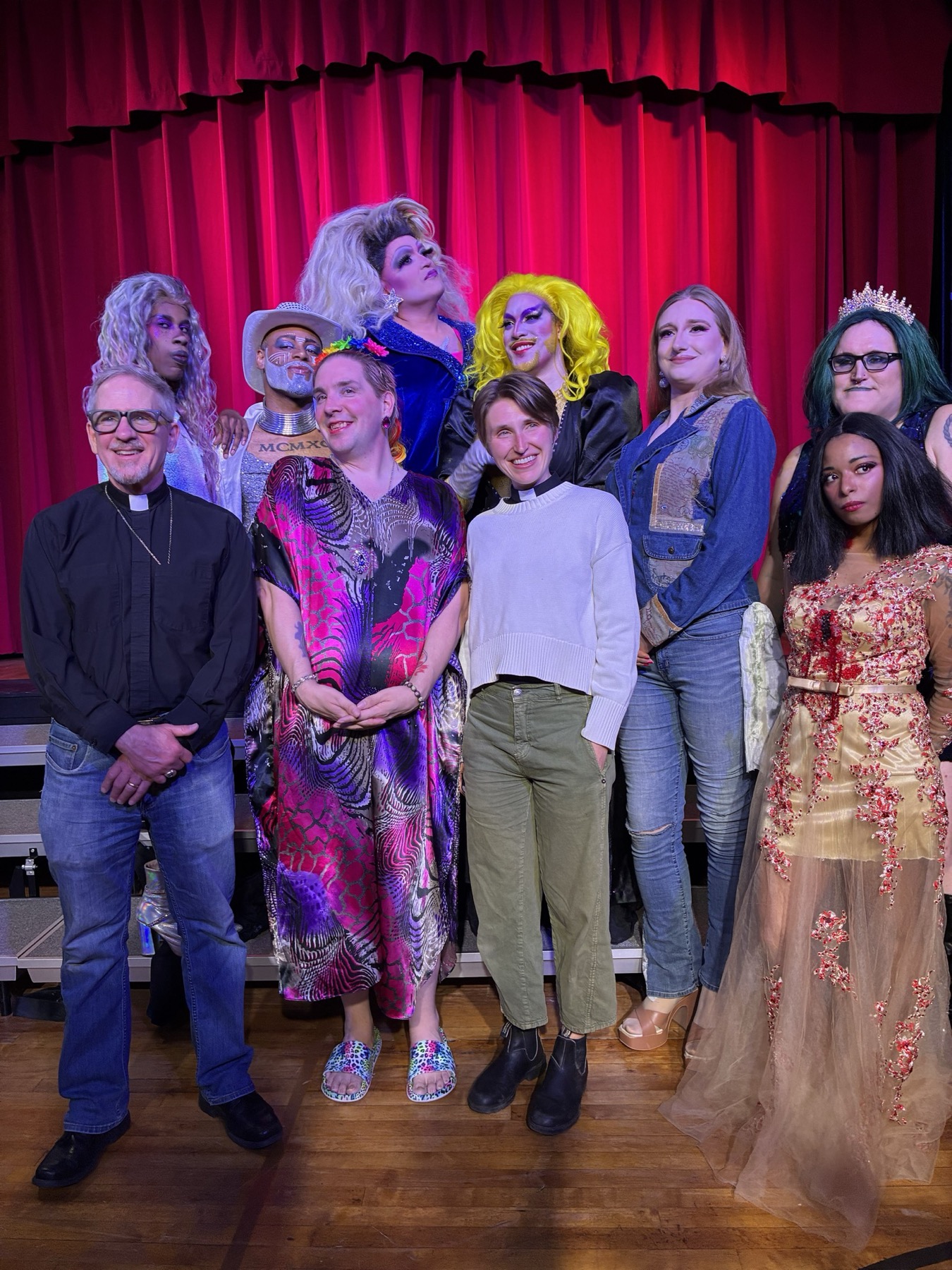
The collaboration has helped strengthen LGBTQ visibility in one of Massachusetts’ few right-leaning conservative pockets. Holy Spirit helps kick off Pride by showing up at the pride flag raising and proclamation at Government Center. The parish hosts “Spaghetti and Sequins,” an annual drag dinner fundraiser for the local Pride festival, drawing enthusiastic crowds who love to tip. In return, Pride Committee members volunteer to help run the church’s neighborhood summer carnival.
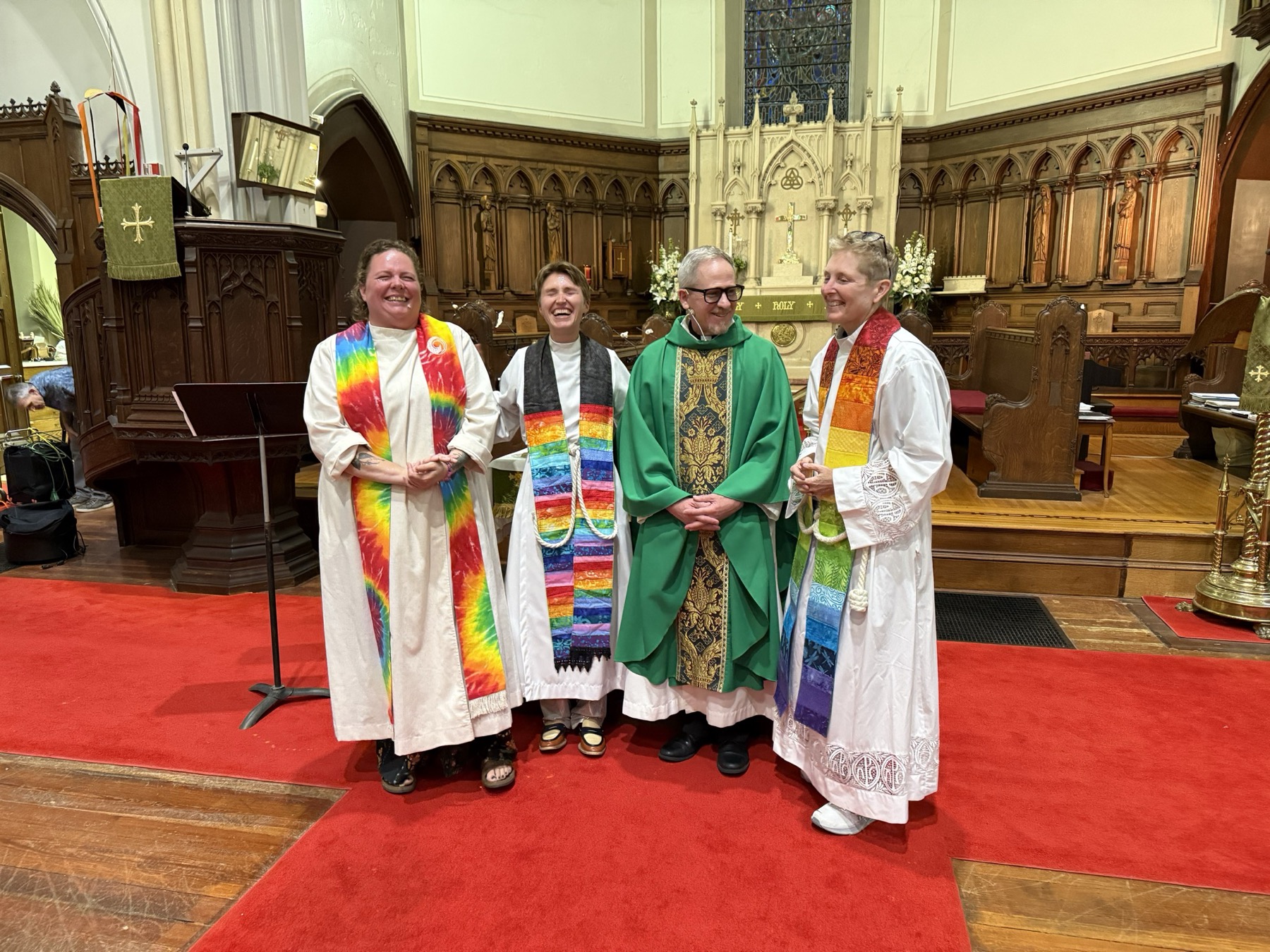
“We had some pushback, people who thought, ‘I don't know if we should join forces with the church,’” Father James recalls. “But we’ve grown to see each other as safe. When you're in a relationship with somebody, it's a whole lot harder to label them. We're just here to love people.”
St. Paul’s, Natick: Abiding incarnate pilgrimage of healing
For St. Paul’s in Natick, an affirming and diverse congregation, participating in Pride is an extension of their embedded anti-racism and justice work. Natick itself is pride-friendly, an identity born a decade ago when the community blanketed the town in rainbow flags after a same-sex couple's home was vandalized.
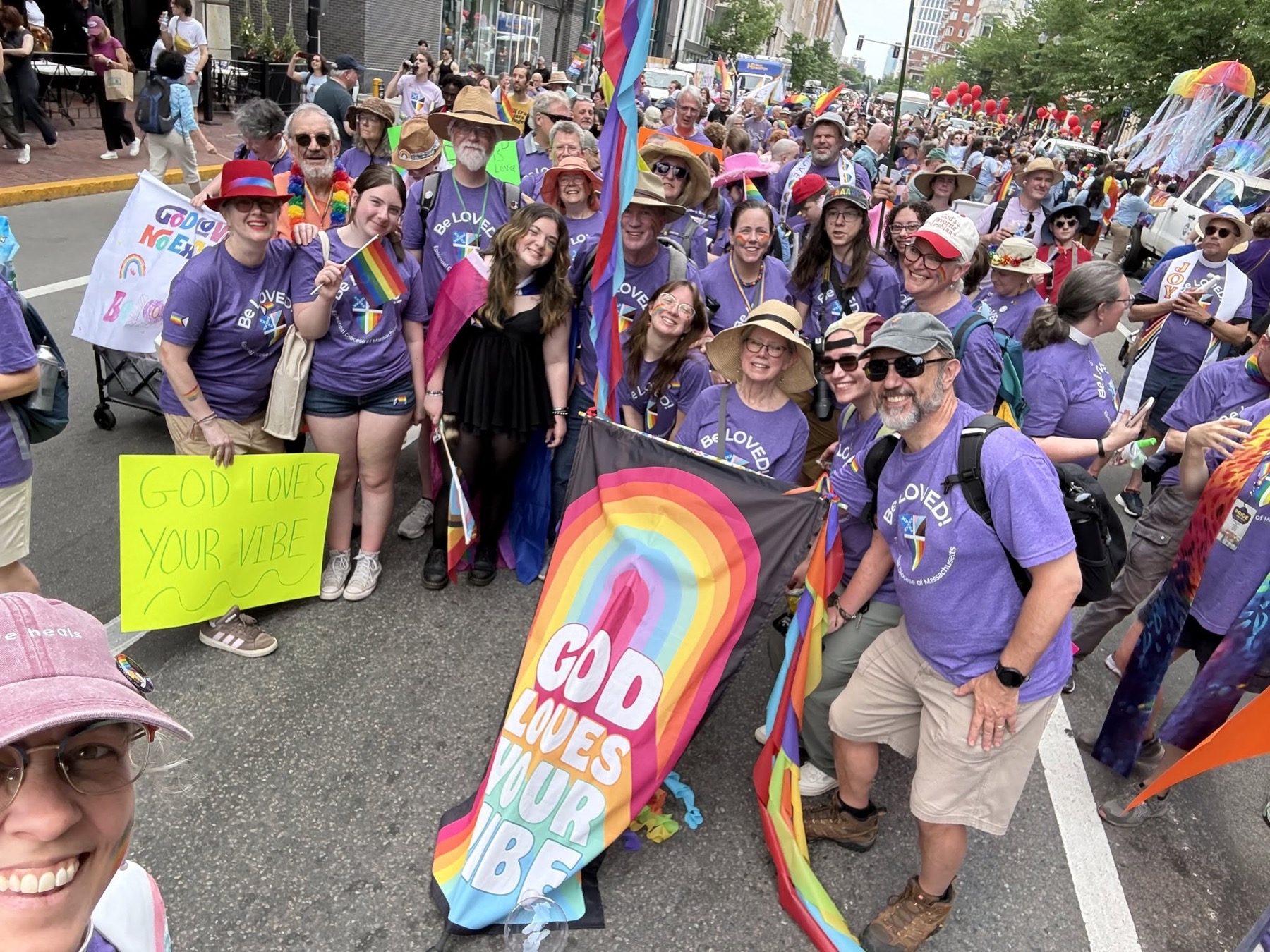
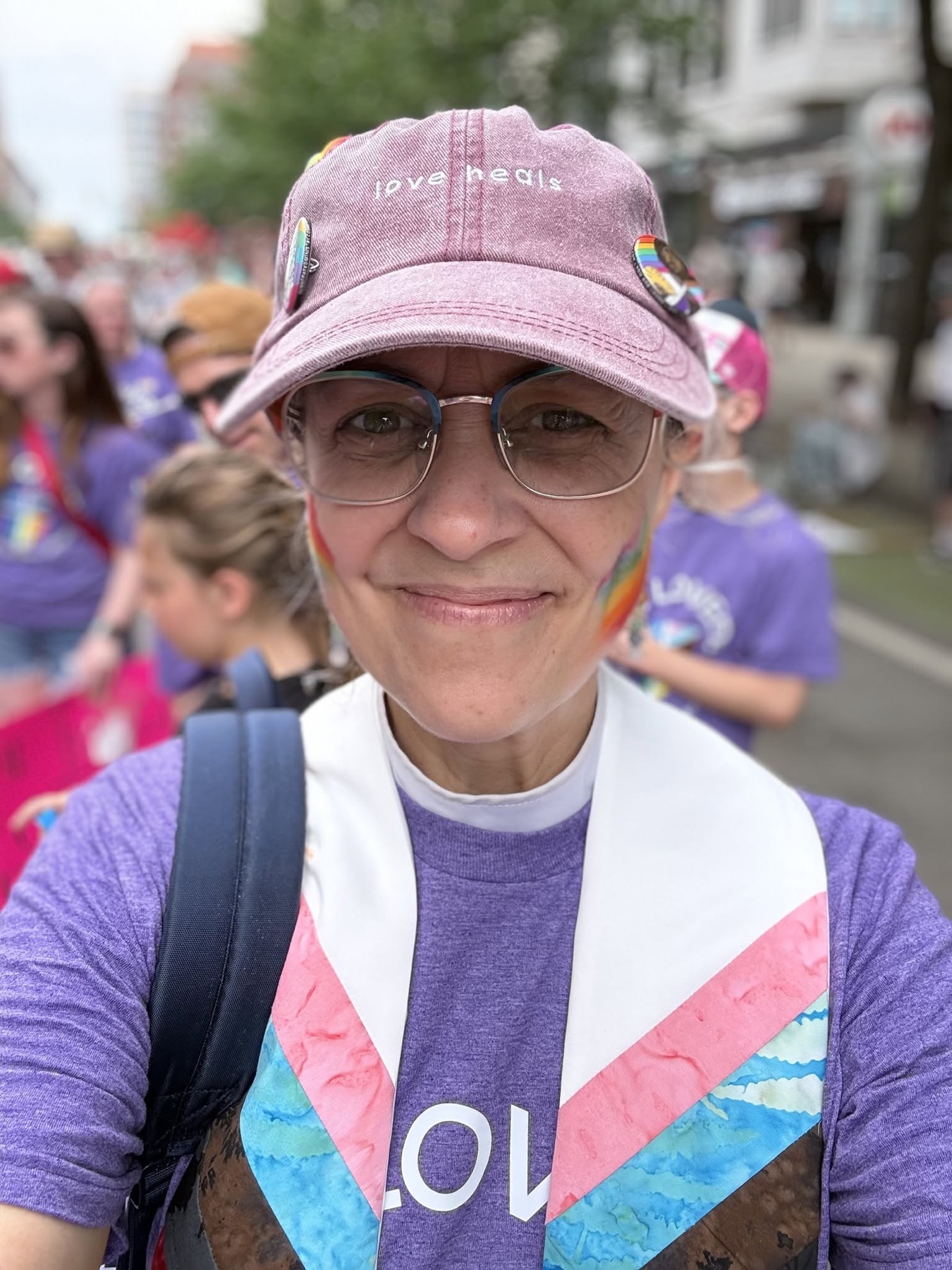
St. Paul's rector, the Rev. Becky Binns, emphasizes that Pride poses a spiritual pilgrimage that extends beyond a parade or festival. This year, 19 parishioners made the journey to Boston Pride and experienced unforgettable, incarnate moments on the hot pavement. For Binns, the divine materialized through her rainbow face-paint marker on a teenager’s cheek, or physical blessings to strangers.
“Halfway through the parade, someone was just in tears,” Binns shared. “I went over and I said, ‘Do you want a rainbow on your face?’ And she said, ‘Yes.’ And then I said, ‘Do you want somebody from the church to give you a hug?’ And she said, ‘Yes, please.’ It started feeling like a holy opportunity to interact with people on their terms, to provide a healing touch.”
For Natick's local Pride Night on June 25, St. Paul's set up a community table on the Natick Common while leaving the church doors wide open as a sanctuary for reflective music, prayer, and connection. While these actions are natural extensions of St. Paul’s beliefs and culture, Binns exhorts her congregants to toughen their commitment.
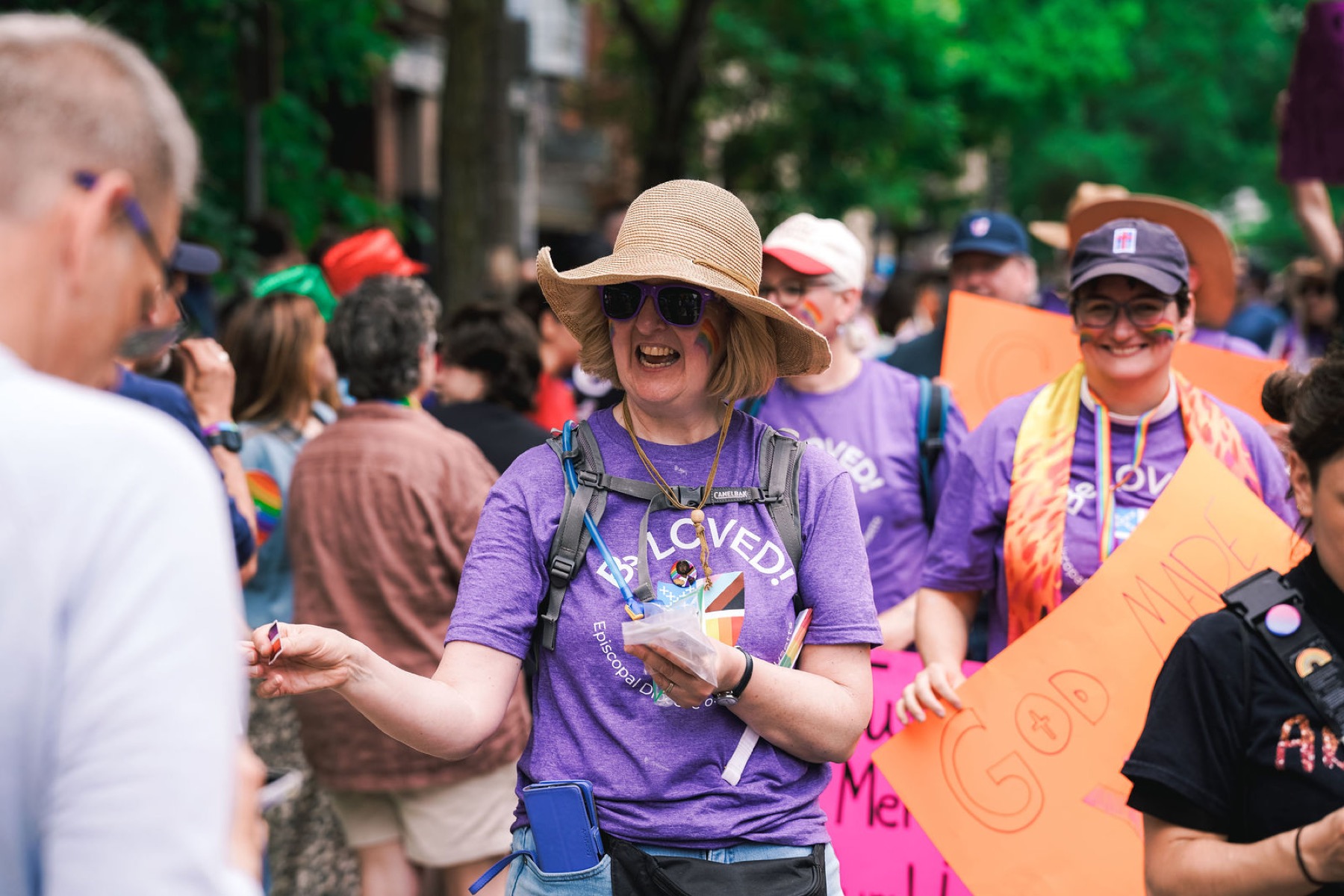
“Would we also do this if it put us in danger?” Binns asked. “Would we also be that brave if it wasn't the cool thing to do, or wasn't the safe thing to do? I think it's just important to check ourselves on that... and make sure that it's got deep roots. If we're not doing that work, we're missing the point.”
More Voices of Pride Across the Diocese
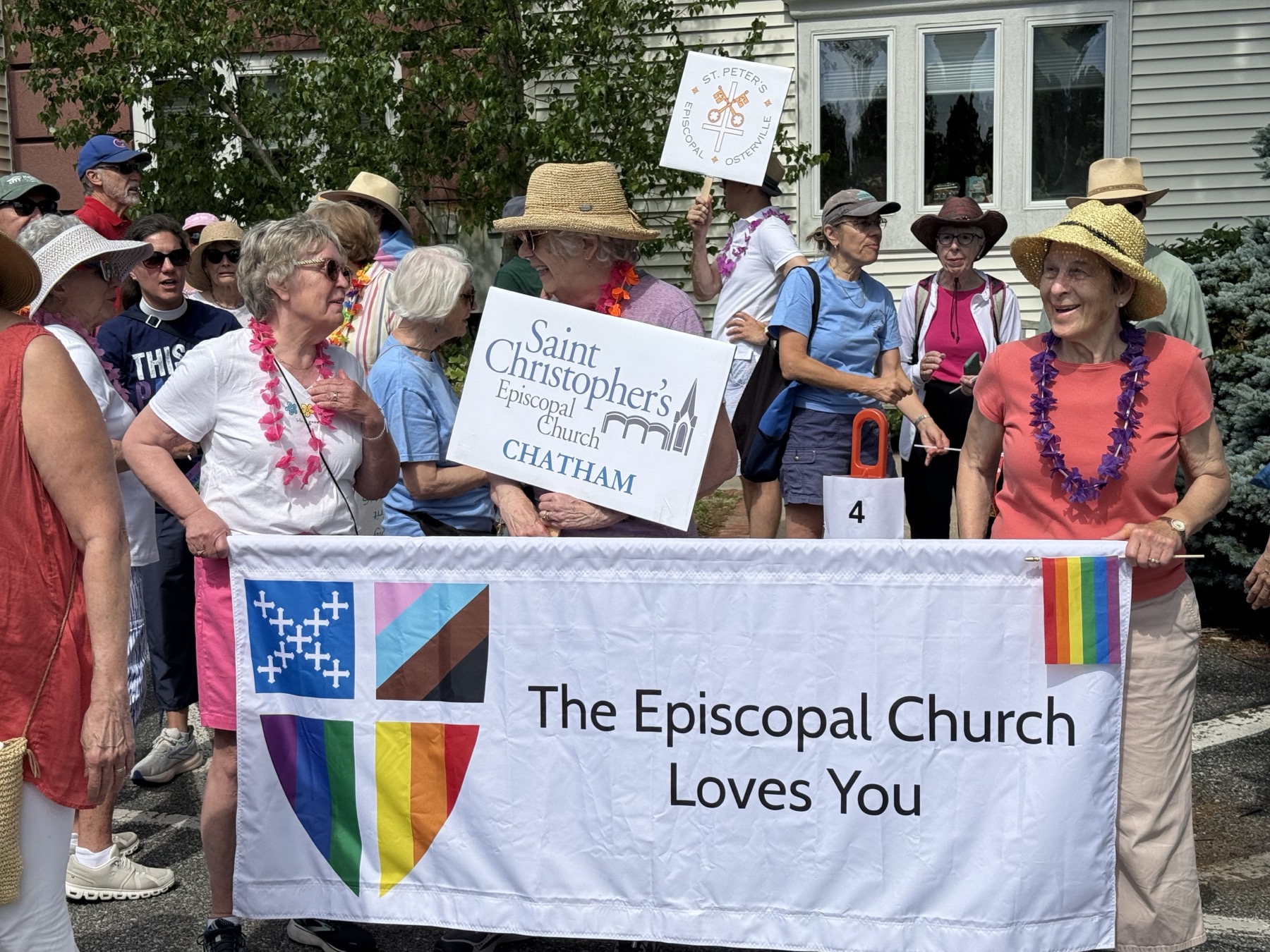
Other leaders and allies from across the diocese commented on the importance of church support for Pride.
“I think it's important that the church bears witness to the love of everyone, and that everyone is included. But my favorite part of Pride? Watching my child get excited about it.” – Margaret Lias, Deputy Chief of Staff
“God knows you from the day you're born. God knows who you are, and I want people to know that, so that they can grow up in that love and feel it around them.” – Faith Salter, St. Andrew’s, Ayer member and representative to Concord River Deanery, which provides local outreach to people in need
“I love the colors, I love the fabulousness, I just love the joy. I am all about joy, and I feel like Pride, even though I'm an ally, is a place for me as well, because I believe that we should all share joy together.” – The Rev. Edwin Daniel Johnson, Canon for Discipleship and Leadership Development
“People have been very grateful to see a church present here at Boston Pride. I feel like some people are a little surprised to see a Christian organization, which goes to show why it's even more important for us to be here.” – Meredith Rippert, Executive Assistant to Bishop Whitworth
“I think it's important for the church to be out here today because we have a message of love and justice and neighborliness, which is so desperately needed in this world. There have been so many Christian communities that have hurt gay people, and we have a better way of showing love.” – The Rev. Malia Crawford, Rector, Church of Our Saviour in Arlington, and contact for Alewife Deanery, which provides local outreach